All posts by Dorothy Nesbit

The dance of honesty – being honest with yourself

In recent days I have been writing about honesty and its opposite – lying, deception, call it what you will.  I recognise in this subject a double bind:  it’s hard work to maintain a lie, it’s hard work to be honest.

Today, I thought I’d say a few words about what it takes to be honest with ourselves.  What immediately springs up for me is compassion.  The more we judge ourselves, the more likely we are to be dishonest with ourselves.  You think you have to be a fully formed Director from the minute you step into the role?  It’s going to be hard for you to be honest about areas in which you don’t yet have the skills you need.  You think you have to be good at managing people?  You may find it hard to own how hopeless you feel when you try to address performance problems in your team – the easy way out is to blame your under-performers.  You think the delays in progress towards your targets are unacceptable?  You could end up blaming all the external factors that have a bearing on results and lose sight of any power you have to make a difference.

At the same time, compassion does not equate to zero accountability – paradoxically, I’ve often found the opposite is true.  If we can show ourselves a level of self-acceptance and compassion, we are often better able to take action.  To take an example from above, if you know you are new to the role of Director and you accept that you will have some learning to do, you will find it better to take action to identify those areas in which you need to learn and to seek out your learning.

One of the most powerful forms of self honesty is the kind of honesty that comes when we attend to our own actions and inner dialogue.  Roger Schwarz, author of The Skilled Facilitator, calls this your “left hand column”.  Here’s an example from one leader from a meeting in which he is practising for the first time attending to his left hand column:

“John puts forward his ideas and I immediately hear judgements in my head.  ‘Here we go again… we’ve been through this a million times and John still doesn’t get it!’  I can feel my temperature rising and my face is getting more red.  I notice that John  has said several things that I haven’t heard because I’m already thinking about how I want to respond.  For the first time, I take a pause before responding – letting him finish.  I feel something new – something I haven’t felt before – humble or embarrassed or something… because for the first time I recognise that I’m not listening.  I always thought the problem was with John and now I realise that I am part of the problem…”

Are you ready for this kind of self-honesty?  Are you ready to be the observer of your own inner dialogue?  Here’s an exercise for you in case you are:

  • Take time alone – thirty minutes or so – with a pen and paper or your notebook or computer;
  • Take a moment to identify a time when you were in your flow – a time when things were going well for you and you were at your best.  Spend ten minutes making notes on your inner dialogue during that time.  Try to capture as much information as you can – about your thoughts, your feelings.  One way to do this is to have separate columns on your piece of paper (a) for what you said and did, (b) for any actions by others, and (c) for your inner dialogue;
  • After ten minutes stop and take a two minute break.  After your break, do the same thing again but this time for a time when things weren’t working for you.  Go through the same process, noting everything you can remember about the event.  Stop writing after ten minutes and take a two minute break;
  • In the remaining six minutes, make notes about your inner dialogue.  Notice what parts of your inner dialogue contributed to your success.  Notice what parts of your inner dialogue contributed to any problems you experienced.  Notice any inner dialogue you have in response to your new insights;
  • Before you finish, take a moment to acknowledge yourself for the work you’ve done and for your self-honesty in the process.
  

Exploring the consequences of honesty and deception

How much hard work do you put into maintaining a lie?

And if you’re telling yourself “this doesn’t apply to me”, hold on!  Take a moment to notice the feelings this question evokes in you and to sit with them – is it irritation, outrage, impatience?  If it is, there may be something for you to learn – if only you’re willing.  Because if you’re honest with yourself and even if you think you always “tell it like it is”, you probably have a way to go when it comes to telling the truth.

I ask the question because telling one lie usually involves you in a number of additional lies, even in the most simple of cases.  Your friend asks you to go out and you tell him you’re busy because you don’t want to take time to explain that you prefer to stay at home.  In order to live with your lie you tell yourself that to tell him would be to hurt his feelings – something which you can only guess in advance.  And when he asks you down the line how your other thing went you have quickly to extemporise a response.  “Fine, thank you…”  already you’ve told another lie.

The workplace is no different.  Perhaps you are holding back from telling your boss you think his plan of action has some potentially disastrous consequences.  Perhaps you have decided not to let your team know about forthcoming changes in the structure of your organisation.  Perhaps you’re avoiding telling Jo that his work colleagues have been complaining about him behind his back.  Whether in work or away, the likelihood is that your attempts to withhold some truth are aimed at saving you from some unwelcome consequence… from the wrath of your boss and from having your “cards marked”, from having to manage a team that’s unsettled and losing focus or from losing staff before you’re ready to let them go, from a response you cannot predict but know might be difficult from Jo…

You’re probably not thinking about the negative consequences of withholding honesty.  You’re not thinking, for example, about how much it weighs on you – what hard work it is and the guilt you feel – to tell a lie.  You’re not thinking about the erosion of trust that accompanies your dishonesty over time.  You’re not thinking about how your current gain is your future loss as those around you uncover the truth and re-visit the way they view you.

You probably don’t know just what’s possible when you embrace and commit to honesty – to a step-by-step journey towards more honest relationships and communication.  How would it be for you, for example, to discover that the response you have most feared from your boss or employing organisation just isn’t going to happen?  Or to discover that it is and to be able to decide how best to respond?  How would it be over time to build relationships in which you can be honest and be accepted at the same time?  How would it be to put down the burden of maintaining some kind of lie – an image of yourself that matches your idea of what you should be as a leader, a parent, an employee, a spouse – and to feel the lightness that comes with being yourself?

I begin to wax lyrical.  I wonder, what is your perception of the consequences of honesty… and deception?

The dance of honesty

Harriet Goldhor Lerner wrote a number of books whose titles begin with the phrase “The Dance” – The Dance of Intimacy, The Dance of Anger, The Dance of Deception…  I haven’t read them all though I did recently read The Dance of Deception as one of a number of books about lying and deception.  Daniel Goleman’s Vital Lies, Simple Truths is another and so is Dorothy Rowe’s Why We Lie:  The Source of our Disasters.

Each book is quite different.  Goleman talks of the science of lying – how it works in the brain.  Lerner writes specifically for women (her book is subtitled Pretending and Truth-telling in Women’s Lives).  Rowe draws on an extraordinary array of contemporary examples to illustrate her thesis.  After I read her book, for example, I was moved to read about the children of prominent Nazis in Stephan Lebert’s book on the subject, My Father’s Keeper and then The Himmler Brothers by Heinrich Himmler’s great niece Katrin Himmler.  Rowe dedicates a whole chapter to Lying for Your Government in which she suggests that whilst the CIA, for example, exists to tell the truth to American presidents, CIA chiefs soon learn that it’s not in their interest to tell the president what he doesn’t want to hear.

Reflected in these books are a number of truths about honesty and lying.  We all lie, for example, and we all lie about lying.  We all lie with good intentions, and we often lie to ourselves about what those good intentions are.  (If you doubt me on this one, just think about a time when you’ve told what often gets called a “white lie” in order “to save someone’s feelings” and try on for size the idea of going ahead and telling the truth.  You’ll mostly find that you were saving yourself from a difficult experience at the same time).

The truth is also that telling the truth can be hard work at times which is why, today, I am appropriating Lerner’s use of the phrase “the dance” and applying it to honesty.  Telling the truth involves a commitment to honesty, a willingness to hear how others respond and – in the longer term – a readiness to live with the unpredictable consequences.

This subject is so vast that I wonder where to start and feel sure I shall return to it.  Perhaps a good place to start is by sending out an invitation to you.  My invitation to you is this:

  • Ask yourself how committed you are to honesty and to telling the truth – a mark out of ten is one way of answering this question;
  • Commit to noticing for a week how honest you are in practice, especially at times when honesty is challenging for you.  Notice the times when you decided to be honest even though you were putting something at risk. Notice the times when you chose to avoid honesty in some way – be it with yourself or with some other person;
  • After a week, return to your mark out of ten and check how accurate it was.
Do let me know how you get on…

Being at choice

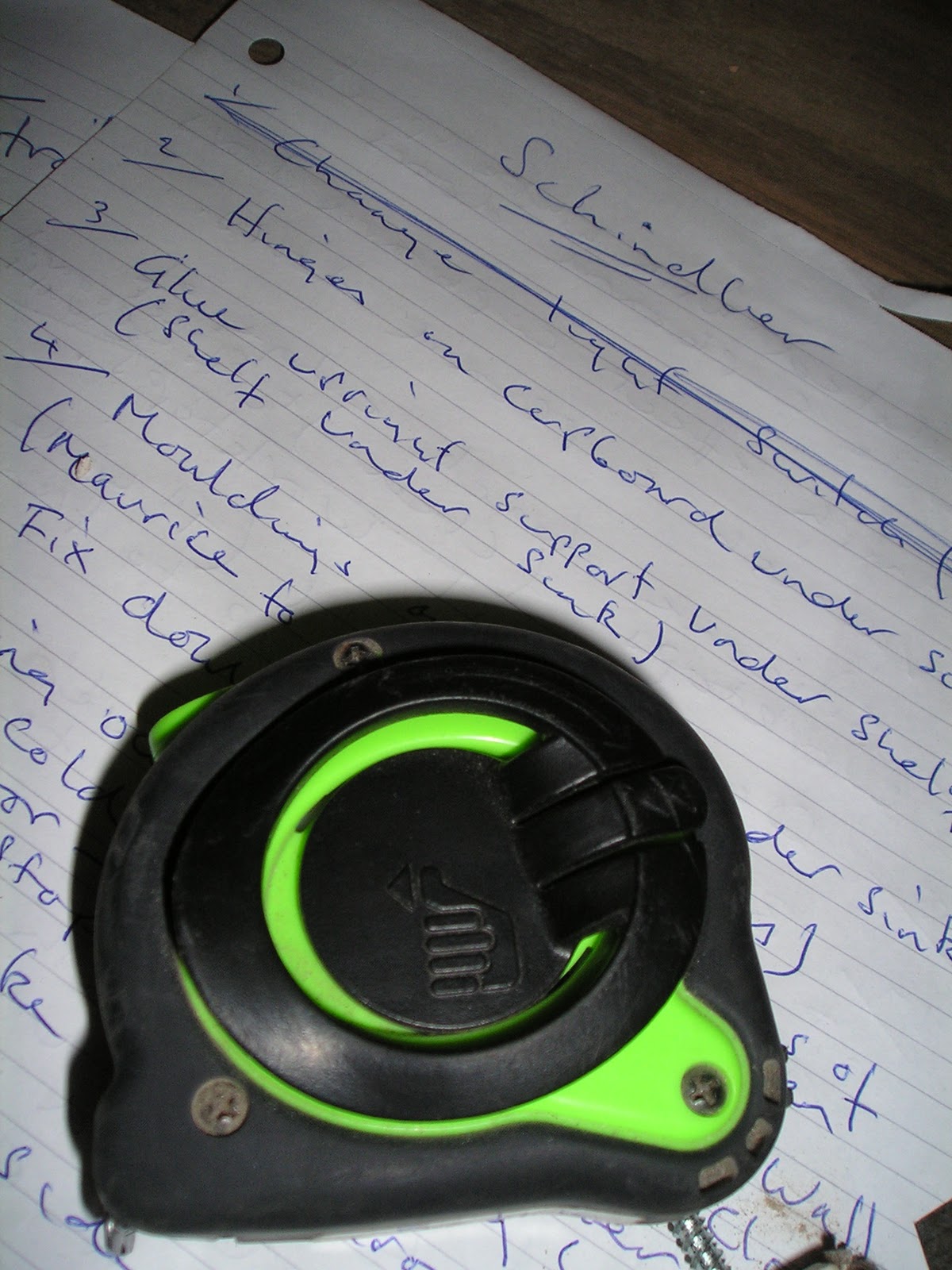
The kitchen is finally moving towards completion.  Gary has put together his “Schindler” of all the things that need to be done before we can say it’s finished.  I am looking forward to populating the cupboards which need to be painted inside before I can finally move in (meantime, Gary and Wills have been making liberal use of them for tools and other items of their trade).

Wills was full of cold at the beginning of last week and I, too, succumbed so that on Friday I caught myself reflecting on all the reasons why I might have caught the cold – catching it from Wills, the impact of the long hard slog of accommodating work in the kitchen, the cold weather…

…and then I caught myself in the act of thinking that somehow the cold had “happened to me”.  To a degree it had of course.  Henry Dreher, in his book The Immune Power Personality (which I’ve mentioned before on this blog), talks of breakthroughs in 19th century science, when “the researches of German physician Robert Koch and French physician Louis Pasteur led to the theory of specific etiology – the idea that diseases were caused by a single microorganism and could be eradicated by a single strategy for destroying the invader”.

Dreher also talks, though, of the work of Claude Bernard, the mid-19th-century French physiologist.  To quote briefly from Dreher’s already much abbreviated description of Bernard’s work, “Health was predicated on balance, and disease was a by-product of imbalance in the interior environment”.  Germs were not so much omnipotent as ready to to take root when the conditions were right.  Reflecting on my own health at this time brought home the tiny deteriorations in my normal health regimes in recent months – drinking far less of my usual “Supergreens“, overlooking my usual vitamin supplements, a diet that isn’t quite up to par, less walking… I knew I was reaping the results of small changes I was already aware of.  I have been telling myself that I’ll get back on track when the kitchen is done.  This is true – and still, the accumulation of small changes is also the sum of my own decisions in recent weeks.

At one level, I’m talking about a common cold.  At another level, I’m also talking about the wider question of what mindset we bring to our lives.  When something goes wrong, do you focus on what has happened to you?  Perhaps wish things were different that are beyond your control?  Or do you focus on your own contribution – what you have done that has made a contribution and what you can do to move forward?

There is a phrase used by some coaches (and no doubt others, too) – “being at choice”.  We are at choice when we focus on our own choices rather than seeing ourselves as the helpless victim of circumstance.  Others use the term “in your own power”.  Over the years I have seen how successful leaders have mastered the art of being at choice.  These are the leaders who use their power of choice to achieve outcomes they desire.  They are often optimistic and resilient in the most difficult of circumstances.  Rather than expend energy in wishing (fruitlessly) that things were different, they harness their creativity to the question “what can I do?”

And lest you are beating yourself up right now or yearning to do things differently and not knowing how, I hasten to add that this isn’t an “either/or” scenario.  Most of us have moments when we are at choice (standing in our power) and others when we are not.  Moving to a more powerful position is something we do one step at a time.  For me, in recent days, just noticing that I am not at choice has opened up possibilities to make different choices.  

The leader’s new clothes


On Friday, a late cancellation afforded me the opportunity to have a late breakfast, watching Andy Murray and Novak Djokovic at the beginning of the men’s singles semi-finals in the Australian Open.  After finishing an assessment report I returned over lunch to watch the end of the match.  It was tantalisingly close.  At times Djokovic – currently world number 1 – was clearly the better player.  Even so, there were moments when Murray’s performance had me thinking it might be possible, just possible, that he might steal the match.

Coming on the back of so many assessments – interviewing men and women on their path to greater seniority at work – I found myself wondering about Murray’s self image at this stage in his career.  Because – as W. Timothy Gallwey pointed out in his book The Inner Game of Tenniswinning at tennis depends significantly on what is going on in the player’s head.  The same is true for the leader, so that perhaps it should come as no surprise that Gallwey’s book has been an enduring hit with men and women in business since it was first published in 1974.

What do I mean by “self image”?  The following comments are adapted from Wikipedia:

A person’s self image is a mental picture, generally of a kind that is quite resistant to change, that depicts not only details that are potentially available to objective investigation by others (height, weight, hair colour etc.) but also items that have been learned by the person about him or herself, either from personal experiences or by internalising the judgements of others.  A more technical term for self image is self-schema.  Like any schemas, self-schemas store information and influence the way we think and remember.  For example, research indicates that information which refers to the self is preferentially encoded and recalled in memory tests.

Thinking of Andy Murray I wonder, does he think of himself as a world number 1 in the making?  This is important because it will influence many choices that he makes both off the court and on:  choices that, in time, may lead him towards – or block his path to – his first Grand Slam title.

Men and women in leadership roles face the same issue.  Each new promotion brings with it a new set of responsibilities which may challenge their self image.  Perhaps the newly promoted leader asks “am I really up to this?” or “is this really me?”  Perhaps s/he seeks to play down the change by imagining that no promotion or other change makes any difference because “I am who I am”.

A successful transition includes the integration into the leader’s self image of beliefs which support success and which also have a basis in reality.  Such a belief might be “I can engage others in a common vision and work with and through others to achieve our goals”.  Of course, the newly promoted leader needs to show that this is actually true – hence my phrase “a basis in reality”.  And there may need to be some interim belief such as “I can learn to engage others in a common vision and to work with and through others to achieve our goals”.

Paradoxically, individuals who are confident in themselves are often better able to integrate new concepts, precisely because they have a strong self image and are not afraid of losing themselves in the midst of changes and adjustments.  Of course, it also helps if they have a clear understanding of what’s needed in their new role, so that the adjustments they make support their success.  In some ways, as we adjust our self image we are like scientists, observing ourselves and identifying what is working for us and what is not as well as studying the differences between our previous role and the new role we have taken on or to which we aspire.

And of course, the need to adjust and adapt our self image is a constant through life as we meet many changes – moving from adolescence to adulthood, from being single to being married, to being a parent, to being old.  These and many other changes demand that we revisit our self image.

LinkedIn and the on-line network

In August 2009 I wrote a posting entitled, LinkedIn:  growing my connections.  At the time I had 49 connections on LinkedIn.

I tend to be a bit of a slow starter when it comes to new technology and I’m still not sure when and why to LinkIn.  I’m delighted to be connected with people I’ve met along the way and with whom I’ve enjoyed working or playing.  Some people ask to connect whom I don’t know and I’m currently pursuing a policy of saying yes and seeing what this leads to.  Only last week, I asked someone who’d asked me to connect if he would kindly stop sending me generalised marketing e-mails via Linkedin to support me in managing my time.  He said yes – consider it done.  Had he said no, or ignored my e-mail and continued sending, I could have broken the link.

I’ve only broken the link once.  It was a link to someone who writes on a forum that I, too, have been writing on for a number of years.  He wrote something about me on the forum I didn’t enjoy and I invited him to dialogue around it.  He never responded.  Two other members of the forum also followed up by telling me all the things they most dislike about me and I took time with them – again, to invite dialogue with the aim of building a better mutual understanding.  I thought about his original posting and his absence of response when I followed up and asked myself, is this someone who is wanting to build a mutually rewarding relationship?  And was it working for me?  When I decided that, no, it wasn’t working for me, I knew it was time to sever the connection on LinkedIn and to let him know that I was up for connecting again – after reaching a better understanding.

Anyway, all this is leading to saying that when I wrote in 2009 I made a note to check how many connections I have a year down the line.  I’ve been a little slow to check the numbers, which today stand at 379.  I am more interested in the quality of those connections than I am in the numbers, so I continue to experiment and explore.

How Iceland bounced back

Recently I discovered PopTech and via PopTech a talk by Iceland’s current President, Olafur Grimsson, about how Iceland bounced back following the stark economic crisis of 2008.

Iceland’s experiences illustrate some general principles of the modern world.  The first of these is this:  that we – whether “we” equals country, company, society or some other entity, are subject to the effects of events beyond our control.  In Iceland’s case, even before it fell prey to the effects of a global economic crisis its economy was severely affected by the eruptions of the Eyjafjallajokull volcano.  As leaders we are naive if we fail to understand that our plans will be affected by events outside our sphere of influence.

Grimsson’s talk suggests, for me, a second important principle:  that our success as leaders lies as much in how we respond to events as it does in the events themselves.  Watching Grimsson’s 20-minute speech I am particularly struck by the way he interrogates the events that affected his country in order to identify the key questions that needed to be answered in a time of major upheaval.

In case you missed the link to Grimsson’s talk, click here.  And if you’ve been following my recent series of postings on developing your ability to think strategically, add this one to your list – it’s a neat example of stepping back to see the big picture.

I welcome your comments and responses:  what comes up for you when you watch Grimsson’s speech?

When there isn’t enough time in the day

I don’t know about you but for me, 2012 has got off to a whirlwind start with new projects alongside my ongoing coaching commitments.  I have found myself squeezing things into the diary – booking phone calls over time booked for other work and then having to work out when to do the work.  I have had early starts and late finishes.  I’ve dropped a (small) ball here and there.  I’ve had to say no when I’d like to say yes.  I have struggled to find time to do the ordinary, everyday things.  I know I can handle this pace for a while – quite a long while, even – and still, it’s not the way I want to live my life.

It is the lot of a coach to find him- or herself working with clients who are grappling with the very issues the coach is working through.  At the moment, for me, it’s time management.  I am fortunate right now that my client base is growing and I’m running to keep up (remember those days?).  My clients are experiencing a range of issues that make it hard to manage their time.  One issue that is making all our lives increasingly challenging is technology.  Recently I have found myself waking up to the alarm on my mobile and – oh!  finding myself looking at e-mails before I’ve even got out of bed.  Especially when clients work in global organisations there is always somebody sending an e-mail.  This is particularly challenging because, if we’re not careful, we are always just a little “wired”:  ready to respond and never fully relaxed.  Clients also find it hard to manage their time in times of change, or after a promotion.
If you’re struggling with time management what can you do to come back into balance and productivity?  Here are a few thoughts from me:
  • Take time out to dream:  You may think I’m crazy and still, this is my number one recommendation.  If you want to create something different, you need to know what it is you want to create.  Put aside all questions of how you might get there and ask yourself what might be true when you have got it right on the time management front.  You’ll probably find it surprising just how much this reveals;
  • Set your sights at the right level:  Especially when you’re newly promoted, you will need to  recalibrate your sights.  Maybe it used to be your role to manage the big projects, but now it’s your job to work out which projects need to be managed – and delegate.  Maybe it used to be your job to make sure everything got done, but now it’s your job to set the direction of your area and to engage others in your team in how to make progress in that direction… you get the gist; 
  • Set some boundaries:  As long as the amount of time you are willing to work is infinitely expandable you will find yourself giving more time than your contracted hours.  (My brother, currently working in Japan, wrote a blog posting recently – The salaryman – about habits in this area in Japan).  Decide what hours you are going to work and when and then use this as your guide.  The question then becomes:  how can I best use the time available to achieve my aims? 
  • Organise, develop or expand your resources:  You may need to take a long hard look at what’s possible in the area of resources.  Maybe you have all the people you need but lack a structure (organisational design, clarity of roles and accountability, ways to monitor progress etc.) that supports effective working.  Maybe you need to expand your resources in one area or more.  Maybe you need to develop the capability of your staff.  Sooner or later you need to come to a view on what you can do and with what resources and establish boundaries for your team as well as yourself;
  • Identify and address the big agenda items:  Some of these may well emerge from your dreaming (above).  They may be significant in scope and require effort across the whole team:  if only, for example, you could establish the reputation of your team with your key customer group, you would have clients in the business who gladly come to you rather than making the case for using contractors to do the work of your team.  Or perhaps they’re more limited in scope and still they eat up your time:  if only, for example, you could get John to perform effectively in his role, you would free your own time and that of others to do the job they are paid to do.  I don’t know what the big ticket items are in your area – do you?
  • Chip away:  This last suggestion reflects the possibility that there may be all sorts of small things you can do differently in order to achieve a whole set of results without risking burnout for you or your team.  If this is the case, you might like to spend a period of time experimenting with changes you can make or you might want to open up this question to your whole team.  The more you ask the question, the more you will find all sorts of changes you can make including small changes that make a big difference.
Your ideal path to balance and productivity may include some or all of these – or other options that I haven’t listed above.  Either way, I’d love to read your comments on time management.  What’s working (or not working) for you?
   

Is a need to please hurting your business?

Mashable.com recently published an interesting blog on the need to please:  Is a need to please hurting your business?  You can read it here.

If you click through to the article, you’ll find it speaks for itself.  In case you’re hesitating, here are three questions you might ask yourself to see if this article might be of interest to you:

  • Do you ever say yes when really, you want to say no – and end up feeling angry and resentful afterwards?
  • Do you ever say yes and then do no – hoping that the yes will be enough to keep someone (your boss, clients, spouse etc.) happy?
  • Do you ever find yourself feeling stretched and overworked because you haven’t found a way to negotiate limits to your total workload?
And of course, you might also ask yourself if you’re managing anyone who displays these patterns.  If you’re managing a whole team that act this way – well, that’s also a sign to pause and reflect.

Kitchen confessions

I know, I know… it’s time I gave an update on the progress of my kitchen.  Is it finished yet?  In fact, Jeannie Morrison, my friend and fellow member of the London Symphony Chorus, was kind enough to e-mail before Christmas and to express her hope that I would be enjoying my brand new kitchen at Christmas.  Sorry, Jeannie,  I’m not there yet.

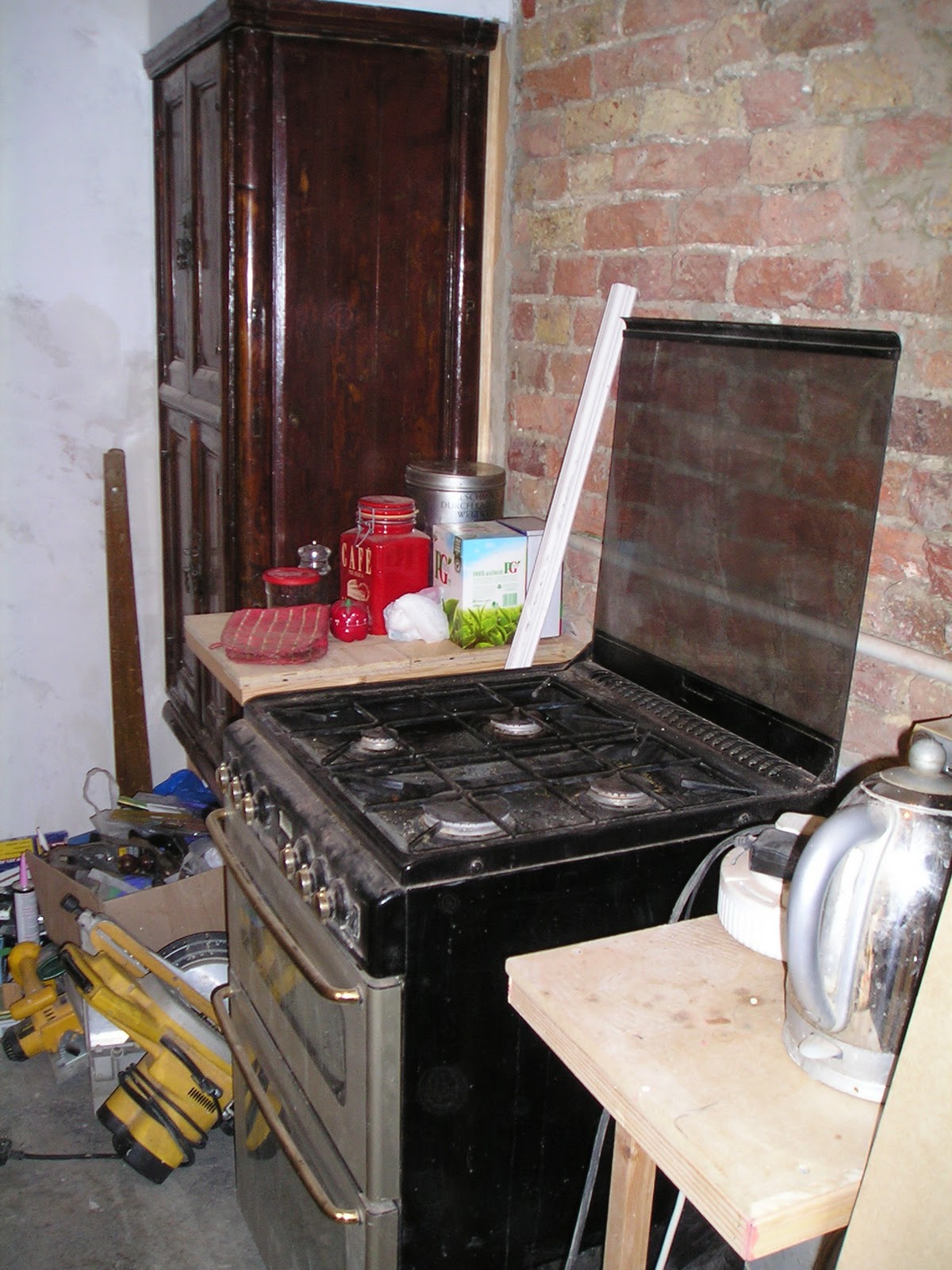
An old Chinese cupboard before its kitchen transformation

The amount of preparation has been prodigious.  The walls have been stripped.  The chimney breast has also been stripped back to the brick work along with a section alongside it.  And because the bricks were in such a poor state, Wills rebuilt part of the chimney breast.  The old sink has been moved round so that the window at the end of the room can be taken out to make way for a door.  And now the new door is in, Wills has started the process of converting the old doorway to a window.  I could carry on – but you get the idea.

You may spot part of the old cupboard as well as
getting a rough idea of the design of the new kitchen

Gary, who spotted a 19th Century Chinese cupboard (rather worse for wear) and saw its potential, has been working miracles with it in the kitchen, creating a cupboard as planned with the central section of the original piece and another wall-to-ceiling cupboard to house the boiler.  If only he’d consent to having his picture taken I might have caught his boyish delight this morning when we discussed just what a success this is proving to be.  And yes, the picture above also gives you some idea of the state of my kitchen at Christmas.  Fortunately, my nephew Edward, who lives with me, was away and – when I was not with friends and family – it was just me at home.  Oh!  Me and the mouse that is!  Seen once but not since.

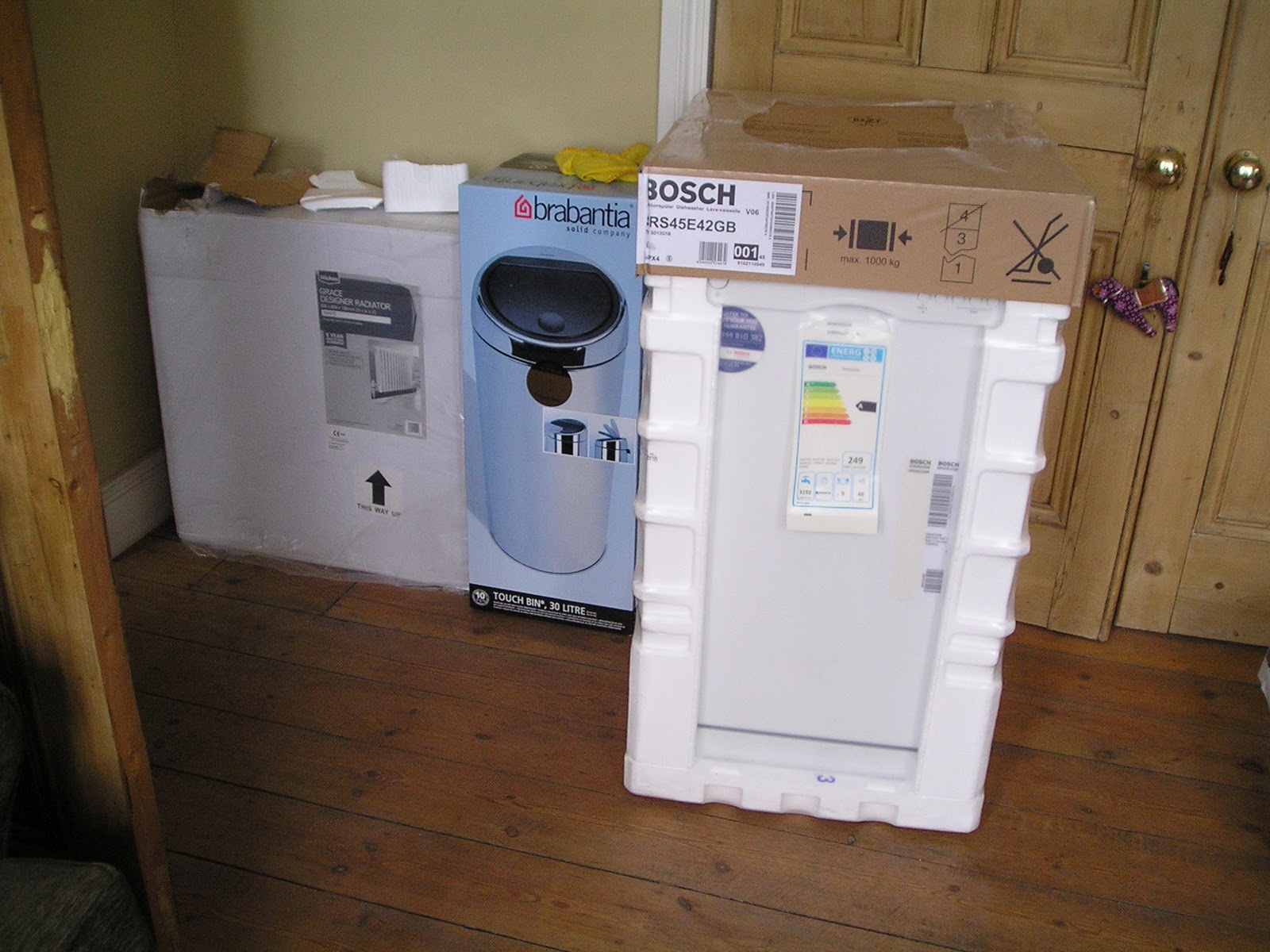
New appliances are multiplying in the lounge   

Over time, various appliances have been delivered and some of them are biding their time in the lounge.  The new sink has been with me for a while, and now the dishwasher, a new radiator and (I confess) the first proper kitchen bin I have ever owned, are all ready and waiting.  It feels so grown up!

I’m smiling as I write, recognising that I, too, share a good deal of Gary’s childlike glee.  I’m also smiling because I recognise just how many of my friends see this kind of experience as the ultimate nightmare.  I think of Roger Hamilton’s book Your Life, Your Legacy:  An Entrepreneur Guide to Finding Your Flow which I’ve mentioned before on this blog.  Hamilton highlights different ways in which entrepreneurs generate wealth and I know that my own signature approach to generating wealth is primarily creative.  I am loving the creative process of designing the new kitchen.  Even in our private lives our key strengths and preferences show up.