All posts by Dorothy Nesbit

When it comes to consulting your staff

Years ago I was involved in a project to audit the leadership “bench strength” of a company in the process of de-merger.  The company’s CEO was anxious about the capability of his senior leadership team – it seemed to him that whenever he asked them for ideas at meetings they were slow to contribute.  Interviewing members of his leadership team it became clear why.  To a man (they were all men) the people we interviewed told us how it was always the CEO’s ideas that prevailed – why put forward ideas that will only ever be dismissed?

Whether it was the quality of the leaders’ ideas that were wanting or the CEO’s willingness to explore the ideas of others, this story tells us something about the challenges of consulting our staff.  Daniel Goleman, in his book The New Leaders:  Transforming The Art Of Leadership Into The Science Of Results, highlights the democratic leadership style as one of several that builds resonance amongst employees which, in turn, leads to improved business outcomes.  At the same time, if you plan to consult your employees, you need to think carefully ahead of time.

Here are a few thoughts from me about when and how to consult:

  •  If a decision is urgent, highly critical for the organisation or if your employees lack the skills or knowledge to add value, think carefully before consulting them.  Used well, the democratic style builds commitment to a course of action but, used badly, it can also undermine it.   You need to ask for their input when you’re open to new ideas and have time to explore their input with them and to reach an agreement with them that works for everyone involved;
  • Do what you can to get clear ahead of time about why you want to consult staff and frame your questions to support your desired outcomes.  There’s a big difference, for example, between saying “let’s think about how we can save money” and “we’ve been charged with saving £3 million pounds and  I’d like to work with you to find ways to do this that maintain high levels of service to our customer and improve the efficiency of our processes”.  This is about both clarity and honesty – the more you are clear up front about your aims, the more likely you are to build trust as well as getting the input you need;
  • If you’re going to consult staff, it helps to have in place ground rules for handling the ideas that come up.  De Bono’s Six Thinking Hats provide one framework for brainstorming ideas.  I am, as you may already know, a fan of Roger Schwarz’s ground rules for effective groups – outlined in his book The Skilled Facilitator Approach.  In particular, take care to differentiate between interests and strategies – a strategy is a means to an end and the interest is the end itself.  Exploring how suggestions will contribute to an end result is one way to ensure that ideas are seen to be heard whether or not they are adopted;
  • Be clear ahead of time about how inputs will be used.  If the decision rests with you, then say so.  If it will be made at a more senior levels, then say so.  If you’d like the team to decide, then say so too – and agree up front how a decision will be made.  In this way, you support a positive experience of the democratic style;
  • Think about consulting staff on a regular basis as a way of building their skills and yours.  If your team is new to this style, you might like to start with a light touch – asking them for ideas, for example, about a non-business critical decision that you will make yourself.  Over time, your use of the democratic style will develop the skills of your staff and shape them as a team.  Ultimately, your team should be visible to your boss and to your boss’s peers and seniors as a highly effective team with plenty of ideas to offer to the organisation.  Even so…
  • Start where you are now.  Hold your team with compassion if this kind of consultation is new to them.  Take it one step at a time and use your judgement in deciding when and how to consult.
I’d like to hear about your experiences of consulting or of being consulted.  Please share the good, the bad and the ugly by posting your comment below.

On the joys of a dirty weekend

Spring is on its way.  The days are getting longer and the sap is rising.  In recent days misty mornings have given way to gloriously sunny days.  I have been yearning to get out into the garden again.  I did it this weekend, donning my gardening trousers – a wonderful pair of jeans I picked up in Singapore when I visited my brother and sis’-in-law a few years back, with great big pockets on each leg which are just perfect for carrying phones and sundry tools.

First, there was the task of emptying some of the tools that have been in my dining room (along with sundry kitchen items) into my new garden shed.  My small collection of tools had a place in my old kitchen but not in the new, and besides, it is no longer a small collection.  Last week the last remnants of rubbish from the building work were taken away so a second task was to hose down the patio (which, by the way, is far larger than I ever remembered it).

I have been chomping at the bit to start planting and this, too, is something I joyfully embarked on.  This year I have decided to include runner beans in my garden having not eaten them for years following an unfortunate incident as a child which has become legendary in the Nesbit family.  This was a case of “I feel sick” “Just one more mouthful” before I was indeed sick.  Perhaps in a few months’ time I’ll be reporting back – was it just that I was sick one unfortunate time, or do I simply not like broad beans?  I’ll let you know.

So, wellies on, I have been revelling in the great outdoors this weekend – or at least my modest share of it.  I am relishing the dirt that has lodged itself beneath my finger nails and grateful that, today, my coaching appointments will all be by phone.  A part of me wishes I’d discovered such joys much earlier in my life.  It has always been true for me that the more I am connected with nature and its cycle of seasons, the more I am well and at peace with myself.  Even as I write my sense of well-being is stepping forward to greet me.

As you are reading this, I wonder what you have been doing this weekend, week, month, year… that nurtures your sense of health and well-being.  It seems to me that leadership includes, as much as any other duty, the responsibility to model self-care to those we lead.

Compassion: fuel for progress and accountability

It has long been my view that accountability – including accountability to ourselves – works best when it rests firmly on a compassionate foundation.  It’s all very well to harangue ourselves when we are not making the progress we crave or think we ought but somehow, the haranguing doesn’t make the progress any faster.  Indeed, it tends to depress our spirits and to make us more cautious about or resistant to taking our next steps.
Given this view, I am not the best coach for any client who wants to be “whipped into shape”.  When it comes to checking progress at the top of a coaching meeting I tend to prefer curiosity over any metaphorical flagellation.  If a client hasn’t taken the steps they thought they would (maybe if they still haven’t taken they steps they thought they would) I prefer to explore than to judge or condemn.  Often, the exploration brings new clarity or insights.  Perhaps a client needs help to overcome some inner resistance or to plug a gap in their skills or resources.  Perhaps s/he needs to check if a course of action really does hit the spot.
It’s always a matter of celebration for me when this philosophy is reflected in feedback from a coaching client, as it is below.  For why would we take the hard road when there is a more compassionate route which takes us more quickly to our destination?  And who wouldn’t want a client to achieve outstanding results within a framework of compassion?
This is what one client said about her experience of coaching:
I signed up for weekly telephone coaching with Dorothy following a recommendation from one of her clients who is also a friend of mine.  Initially I thought we’d work for three months or so but several times I extended the coaching and we ended up working for about eight months.
Dorothy facilitated the coaching each week, helping me to identify areas in which I most wanted help.  I thought coaching would be far more instructive than it was but it was me who came up with the answers and next steps.  I valued her empathy – she was extremely caring and supportive which, in hindsight, I needed more than a “crack of the whip”.  She was objective and constructive, and helped me to get clear on what I needed and to take steps forward.  I particularly valued the way she helped me to notice and congratulate myself on some of my achievements, which gave me added motivation and momentum.
As a result of our work together, I’m much clearer than I was about the kind of culture that I want to work in.  I decided to move from a contracting role to a senior corporate role where I’m now adding value and feeling good about myself.  I’ve also taken a look at the leadership qualities I want to exhibit and am taking steps to develop in key areas.
Celestine Hyde
Vice President
Investment Banking

Making the case for child labour

Last week it was my turn to offer a post for the HRUK group on Linkedin, which is also published at http://discusshr.blogspot.com/.  The postings are designed to stimulate discussion amongst professionals in the world of Learning and Development and human Resources.  Here it is:

Sometimes, it takes personal experience to bring home the challenges that we face in society at large.  So it is that, in recent months, a number of personal experiences have brought home to me the plight of young people in our current times.
About 18 months ago a young friend, newly graduated, took up a teaching job in China.  He is one of a generation of young people who are at a loss to find suitable work despite doing everything they were told to do (“work hard, get a good education”) to succeed.  His experience was reinforced more recently when I spoke to a family friend, mother of two graduates – one of whom has subsequently trained as a barrister – who have both been unemployed for three years since leaving education.  Even the local supermarkets have said no to employing them because they are “over-qualified” for the jobs available.
And yes, last years’ riots (which I mentioned in my December posting) also brought home the challenges young people face.  I wrote on the day of the riots about an encounter with two young people who were lingering outside my front door after the rioters had left.  I asked them if they’d been involved:
“No, not us, we’re good boys.  We’re just covering up our faces because we don’t want to risk losing our jobs if we’re seen.  But they” – pointing to the police – “they’ve got to understand that if they keep taking our jobs away, we’re going to do something – they’ve got to understand”.
I look back on my own formative years and realise how much I have to be grateful for.  From a young age I had opportunities to earn money.  I contributed half the cost of my first trip abroad (aged 14) from those earnings, which came from babysitting, from selling mushrooms which I picked on my parents’ farm before going to school, and from other work I did around the farm.
Later, aged 16 or so, I had a Saturday job at a department store some ten miles away, catching the bus to and from work.  During my university years I spent holidays working at an old peoples’ home as Deputy Manager (something that, in retrospect, I can hardly believe) and, one year, doing the grape harvest in France.  I was an au pair in Austria before I started my degree course and taught English in a French school for a year as part of my degree.  In Austria I also taught English to one of my neighbour’s children.  In France I tutored the son of an English family due to return to the UK as he prepared to take GCSEs.
From an early age there was unpaid work, too – what often get called “chores”.  At home these included such things as laying the table and washing up after meals.  In my last year at school I undertook to turn on the oven that warmed the plates for lunch at the beginning of each school day.  At secondary school the prefects system conferred responsibility.  By the time I left home I had at least some awareness of what it takes to manage my finances and to maintain a home.  I’ve often thought of myself as particularly naive about the world of work during my formative years – I know now of many career paths which I could have taken then and of which I was just not aware at the time.  Still, by the time I left full-time education I had experienced a variety of work.
Of course, the world has moved on since my childhood.  And still, I wonder what messages we need to take from these experiences that might still apply today.  Here are my first thoughts:
  • I see a need for humility amongst the adults whose responsibility it is to contribute to children and young adults as they prepare for adult life and the world of work.  The world today is different from the world we grew up in and tomorrow’s world will be different again.  Imagining we know the answers for our children may go some way towards assuaging our fears and still, in the end, our role is to help young people find their own way in this ever-changing world;
  • We all have a desire – a need, even – to contribute to others.  Letting children play a role in the house from an early age supports them in meeting this need, builds self esteem and prepares them for their life as independent adults;
  • Success in adult life takes many forms, not all of which depend on our exam results.  Introducing children to both paid and unpaid work from an early age supports them in meeting immediate needs, in developing skills of living and in exploring possible avenues for a future career;
  • In a world in which not everyone can find a job at all times, we – the adults – need to remember that, with or without a job, we are all, fundamentally, OK.

Are you ready to have other people happily help you grow your business?

It’s not often I do it and still… today I’m sending out details to my network of an event I’ll be attending on 29th March, when Jason Stein of Heart of Business will be offering a workshop for small business owners under the banner: 

Are you ready to have other people happily help you grow your business? 

Jason has ten years experience as a certified nonviolent communication trainer in the States and has a passion for business. I know him via Heart of Business

If you’re interested to learn more, take a look by clicking here. You’ll find details of the course and also an interview with Jason which may be of interest whether or not you’re interested in attending the event. 

Especially if you’re finding it hard to make the contribution you want to make in the world and to achieve the level of income you yearn for to meet your needs comfortably, Jason is someone you might like to know about.


Oh!  And whether you’re interested or not get this:  I’m sharing details of Jason’s workshop because of requests he made of his network in recent weeks.  The first was a no-pressure, how-would-you-like-to-help request he made when he was first thinking of planning his trip.  Way to go, Jason!

The new rules for getting a job

Just how much are the rules of job-hunting changing?  I see great variety of ways in which people are setting about getting a new job.  The one thing I know for sure is that this is a hot topic for discussion.

The Harvard Business Review knows this, too.  They’re running a whole series of postings on the subject this month – just follow this link.

I’m smiling, recognising the diversity of my clients’ strategies for moving through their career.  I don’t believe there is one single “right way” to manage your career path and still, I hope there are right ways for you.

Kitchen celebrations

A thing of beauty is a joy forever
John Keats
Endymion

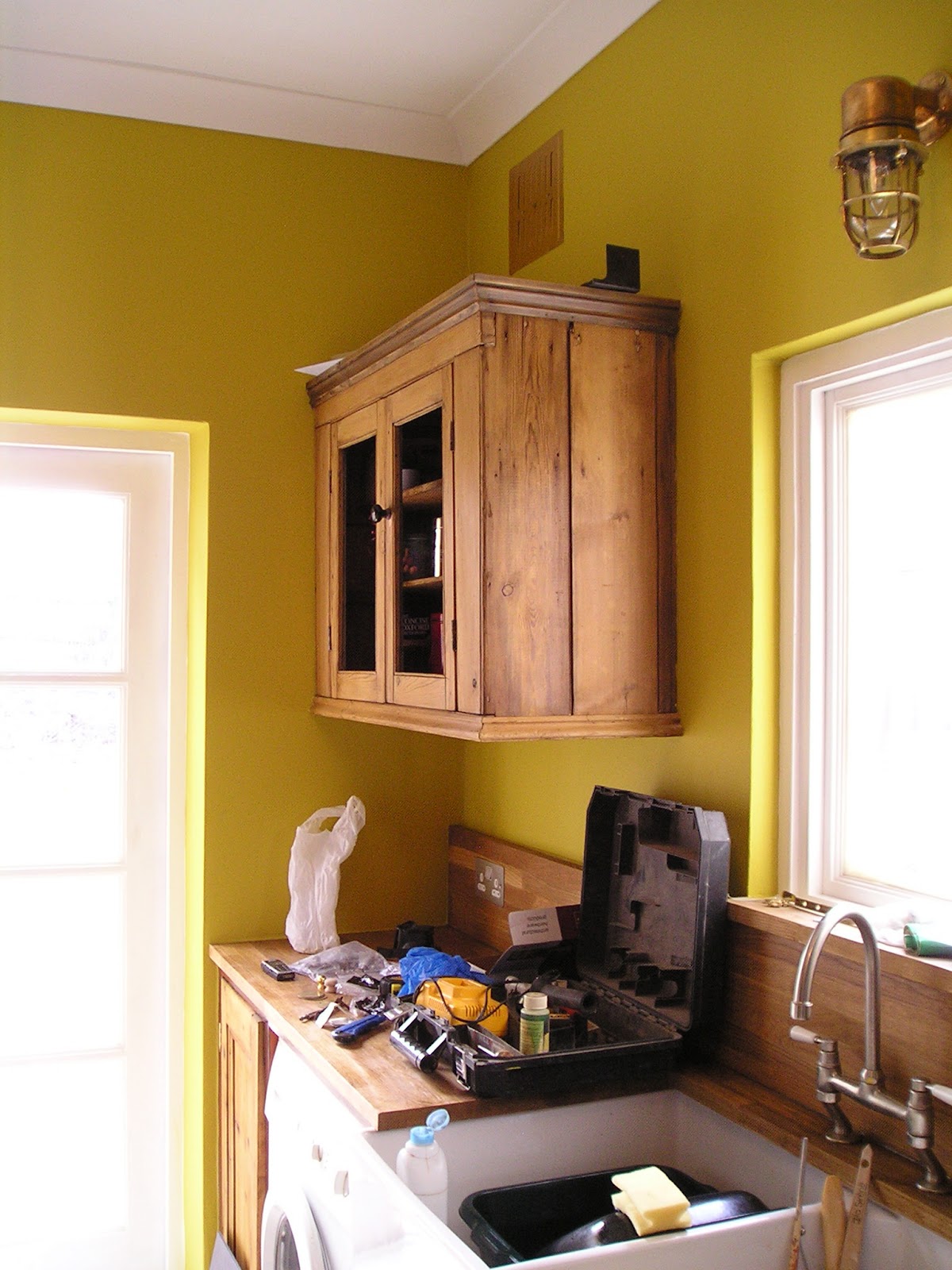
Yes, the kitchen is finished!  After three months of a world turned upside down I am now in the process of deciding what goes where, gradually moving things from the dining room into their new homes in the kitchen.  There has been much washing of builders’ dust from mugs, containers etc.

Winter has also returned and my camera is not coping well with today’s gloom so the photos above and below are already a week or two old.  Final touches have been done.  The magnificent sculptural shelves below are peopled with cook books, gardening books and a teapot or two.

I am totally in love with the kitchen.  I notice already how much more pleasure I have even in the simple act of making a cup of tea.  Edward, my nephew, is not the only person who has commented on the “country” feel of the kitchen and Gary’s sister-in-law, who teaches interior design, commented favourably when she popped by recently – this is not so much a kitchen as a room.  It’s a place to live in, for sure.

In this moment of writing – in haste and between coaching calls – I am also aware of the journey that has taken place in my house over the last three months and the enormous challenge of working in the house whilst also having such a major project done.  At times I have been giving 10-minute warnings ahead of coaching calls (and am grateful both to Gary and Wills for their flexibility and to clients for their understanding when occasionally the sound of drilling erupts in the background).

There have been conversations to be had and decisions to be made at times I would otherwise have spent working.  I have loved my close involvement in this project and saying yes to this project has also meant saying no to other things, including my work.

I reflect that one of the challenges in life is that saying yes to one thing always means saying to no to others.  I wonder, what are you saying yes to?

Learning leadership from role models

Harvard Business Review’s Morning Advantage came up with another neat article recently.  What did HBR say about the article?


Do you subscribe to the notion of “born leaders?” Or do you believe that the ability to lead is derived from a set of psychological properties that can be learned? The answer to that question, says Art Markman, goes to the heart of how much you’ll be influenced by role models. Not surprisingly, the more you think that leadership skills can be acquired, the greater the positive influence of others on your behaviour. Markman’s belief is that we can all learn — at the very least, improve — our leadership skills. Thus, those of us who don’t seek and study role models are missing an important opportunity.

Click here if you’d like to read the full article which is offered by Psychology Today.

Savouring a ‘thank you’

I’ve had a busy start to the year.  As well as working with a portfolio of coaching and consulting clients I have been on the steep uphill curve of ‘project mobilisation’, conducting a number of assessments for a new client on behalf of my former employer, The Hay Group.  This has meant getting up to speed on a new process and report format with more tiny details than I handle with ease – details which, in any case, have been subject to adjustments along the way.

Last week, I had my final debrief (for now) with one of the people I assessed.  He thanked me for my time and gave unsolicited feedback which he subsequently shared in an e-mail with his line manager and with my colleagues at the Hay Group.  The next day, our project manager sent an e-mail saying thank you to the whole team.

In the midst of so many thank yous I have taken time to reflect on the team of which I am a member.  The central project team have liaised with me to arrange dates, manage the flow of information so that I have everything I need for each assessment and so that our clients get their reports exactly when they need them.  Members of the Hay QA team have provided an essential point of reference as we calibrate our scores across the team and between our own team and our client’s other main provider.  Members of the wider project team have liaised with the client at a high level to clarify what’s needed and provided a flow of information which has also supported the process.  I could go on…

I have also taken time to reflect on my own contribution.  There have been calls ahead of assessments to clarify the context for the assessment and ensure I am well-briefed.  There have been early-morning starts, travelling to meet with clients and conduct interviews and, afterwards the writing of reports and debriefs with assessment candidates and their line managers.  I have employed many skills I have (including interviewing, analysing, writing, coaching) and some I don’t (it’s a miracle I manage to arrive in the right place at the right time – such organisation is a learned rather than a natural skill for me).  I like to think I have done good work and I’ve certainly done it with the intention to add value to each client as well as to support an organisational (promotion) process.

One thing I do notice is this:  that our project manager, rather than say ‘well done’, said ‘thank you’.  Oh!  How sweet this is to my ears!  Perhaps it’s only me and still, I’d much rather hear someone’s appreciation of my work and the difference it has made to them than I would hear someone’s judgement.  To me, the work I do has meaning because it makes a difference to someone or something and this is what I hear in a thank you.

Do you say ‘well done!’ or ‘thank you’ to those you lead?

The dance of honesty – being honest with others

It’s taken me a while to get to this posting, in which I want to explore what it takes to be honest to others.  Having written three postings on what I’m calling the dance of honesty I am aware that this is a vast subject – I shall touch it lightly today.

Let’s do this together.  Take a moment to think of something you’d like to share with someone at home or at work – something you’d like to share but hesitate to mention.  Notice what you feel when you think about sharing it.  Perhaps it’s irritation because you feel the other person “ought to know”.  Perhaps you feel concerned when you think the other person might be hurt or anxious when you think they might be offended.  It is these feelings and the thoughts that sit behind them that are holding you back.

Having checked in with your feelings, notice the thoughts that accompany them.  Often, when we hesitate to share some truth, it is because we have a sense that there’s some risk involved.  Perhaps there is a risk – you might know, for example, how critical your boss is of anyone who doesn’t share his view.  (I once worked with a leadership team who all told me how they’d stopped sharing ideas with their boss because his ideas always prevailed.  The boss thought his team had no creativity at all).  Perhaps your thoughts echo some old theme in your life, usually from childhood – you always feel anxious about sharing your feelings or expressing an alternative point of view.

This difference – between some objectively identifiable risk and some old fear is important.  If it’s the latter, it may be especially important that you start to take steps which will help you to differentiate between situations you faced way back when and what is true in the here and now.  (That’s a whole other posting in itself).  Either way, though, telling the truth depends on your willingness to face consequences that are – as yet – unknown.  So, right now, thinking about the thing you have not yet said, just notice how willing you are to face unknown outcomes.  It isn’t always easy.

It may not be wise.  Before you speak your truth, you may like to ask yourself, what outcome am I hoping for?  Let’s take the example above – your boss is pursuing a proposal you think is bad for your organisation.  At the same time, you know he’s slow to take on board the ideas of others.  You may have more influence over the outcomes if you take time to think through how best to convey your ideas so that he will hear you.  Perhaps you need to address his main concerns when you share your views – showing, for example, how another strategy may be more effective in boosting sales or reducing staffing costs.  Perhaps you need to speak quietly with others to whom he might listen more willingly – his most trusted colleagues in the business.

If you do decide to speak with him directly, you could do worse than follow some simple guidelines – which I combine from a number of sources (including Marshall Rosenberg’s Nonviolent Communication:  A Language for Life and Roger Schwarz’s The Skilled Facilitator):

  • Build and maintain connection – especially when you’re sharing something difficult for both parties, it’s important to remember to build and maintain rapport.  You can do this in many different ways – by checking in (“how is this landing with you?”), by gently mirroring body language and tone of voice, by seeking to understand what’s important to him or her.  Begin by holding the intention to connect and remind yourself of this intention if things get tough;
  • Focus on interests, not positions – be clear on what needs you want to meet by being honest and be open to the needs of others.  Do what you can to share your own needs and to hear and understand the needs of the other person.  Then you can explore strategies – a path of action – that meets everyone’s needs;
  • Share observations and avoid judgements – you’ll make it easier for the other person to hear you if you share relevant information in the form of observations (“when you said ‘X…'”) rather than presenting your conclusions as the truth.  This might include sharing your thoughts and feelings as observations – there’s a big difference between saying “You’re getting this completely wrong” and saying “I’m telling myself that you’re getting this completely wrong and that makes me feel anxious”;
  • Make clear requests – be clear what response you want and ask for it.  Be ready, too, to accept a “no”.  Equally, be ready to receive requests from the person you are talking with and be ready to say “yes” or “no”.
Whether you are speaking honestly at work or in your private life you may or may not get to an outcome that meets your needs well.  Being honest, though, helps you to test what’s possible.  It may open up a far better outcome than you expected – or provide information that tells your needs won’t be met in the way you hoped.  This, too, opens up the opportunity to explore alternative ways to meet your needs.
I wonder, how does this land with you?