Tag Archives: London Symphony Chorus

When you’re the boss – becoming the grown-up in your team

As I sit, I’m keeping one eye on the clock – I’ll be dashing out of the door in 40 minutes or so to sing Carmina Burana at the Barbican concert hall in London this evening.

I have fond memories of this piece from my early days with the London Symphony Chorus.  Back then it was a staple in our schedule – Richard Hickox used to start the year with this crowd puller, which has been used by any number of advertisers over the years for its great tunes.  Popularity didn’t stand in the way of high standards – Richard was famous for rehearsing relentlessly.  I remember rehearsing the semi chorus sections until the pianissimi were unfeasibly quiet as well as tutti rehearsals that ran to the last minute of our allocated rehearsal time – if not a little longer.  In those days, Richard would also give us a final ‘pep talk’ before the concert to remind us of the spirit of the piece and encourage us to sing well.  We were told this was a great piece, and we believed it.  We were prepared to make it a great performance, and we did.

Now, given that I joined the chorus in 1986 (or was it 1987?) you could certainly accuse me of a touch of nostalgia.  Those were the days.  But something else is also on my mind.  Recently, I was struck when a client of mine told me how disconcerting it had been for her to discover just how much weight members of her team placed on all sorts of comments she made.  The implication for her was this:  she was setting the tone for her team without even realising it.  If she expressed frustration about her boss’s latest initiative within earshot of her team she was sending the signal that it wasn’t something to be taken seriously.  If she responded to a mistake by one of her team members before she processed her initial emotions – well, the rebuke she made might cut deep for her team member and the effect would stay long after she’d dealt with the issues arising and got over her initial concerns.  It came as a shock to her to realise the impact of her comments.

My client was discovering the symbolic importance of her role as a leader.  The fact that she held this role, rather than anything about her in particular, meant that people looked to her for – well, a lead.  Effectively, she had become for her team members a kind of ‘parent at work’.  Her team members were projecting onto her all kind of expectations of what such a ‘parent’ should be.  One of their expectations was that she would know best so they took her views seriously.  (And in case you find this idea rather fanciful or my client’s experience an exception, you might like to dive into the research which shows that a leader has a significant impact on the climate in a team and that this, in turn, affects performance.  Try Goleman’s The New Leaders for an easily accessible read or Litwin and Stringer’s Motivation and Organizational Climate to dive deeper into the statistics).

What implications does all this have for my client?  Already she had become conscious of the impact of her comments.  She knew she had to choose her comments more carefully.  This is what is called ‘framing’ in the field of NLP (or neuro-linguistic programming) and it does exactly what it says on the tin – it’s about the frame you put around something you talk about.  The boss’s new initiative?  Well, it could be ‘just one more mad idea from the boss to keep us from our day jobs’ or it could be ‘a way to accelerate our progress towards our sales target’.  And if you can’t see the benefit of an initiative from the boss – well, you might want to thrash that out with your boss before you start talking to your team or at least to process your emotions.  In a sense, it’s this processing that makes you the ‘parent’ or the ‘grown-up’ in the team.

And Carmina Burana?  ‘That tired old piece’ or ‘a piece that continues to stimulate the senses and capture the imagination’.  In case you’d like to decide for yourself, click here to listen to an extract.  Meantime, I’m off to sing.    

Bring on the year ahead!

Britain weather: despite deluge, ministers tell us to do more to save water

It’s been a strange week.  In the midst of drought Britain has seen more rain in recent days than I can remember for a long time – and even the odd tornado.  I have been waiting for gaps in the rain to take my beloved seedlings outside for toughening up in their mini-greenhouse (and keeping an eye on the winds lest they get blown away).

My birthday on Tuesday was much as I expected it.  I took time to have an indulgent breakfast – coffee and a bacon butty (strictly against the doctor’s orders) before I started to work.  Edward, my nephew, was also up in time to join me in opening cards and presents on our shared birthday.  Then I took to my study to pore over notes from an interview I conducted last week.  First I pulled together my evidence and decided on the ratings against the client’s competency model and then, after lunch, I wrote the report and sent it off.  It was all finished in time for me to bring those seedlings indoors and go off to choir for rehearsal in the evening.  On the way back I bought myself a McChicken burger – not so much a birthday treat as a late-evening ‘what on earth shall I eat?’ decision.  Even after all these years, I still struggle to know what to eat and when on choir evenings.

And yes, there were cards and messages on Facebook and more besides.  I phoned Mum on my way to choir who told me she’d been awake at ten minutes past midnight remembering my birth.  I came home to a message on the phone from my younger brother and his family – singing happy birthday down the phone.  (My nephew, aged six, was doing at least as much giggling as singing).  The cards and messages have continued to arrive as the week has gone on including one from a lost friend who looked me up on the world wide web and dropped me an unexpected line.  And celebrations will continue today with the arrival of my mother and my niece and her husband and a birthday trip to the Spice of Life Indian restaurant.

At the same time, I have been grappling with some kind of low-level flu-like bug which has left me feeling rather weak.  There have been moments when it has felt as though my joints were on fire.  Yesterday, when all my reports were written and signed off I checked my diary and asked myself:  is there anything that can’t wait until next week?  When I decided there wasn’t I took myself to bed for an afternoon sleep.  Later, I got up and walked around the garden and realised that, feeling so weak, there was no way I would be going to choir.  I curled up at home and went to bed ready to resume that sleep.  Today I feel refreshed – and still glad the weekend lies ahead.

I wouldn’t change a bit of it.  In the end, a rich life is made up of tiny details as much as it is of its significant events.  As I finish the week I am celebrating with a glad and peaceful heart.  Bring on the year ahead!

Wouldn’t you just die without Mahler?

On Sunday, along with my fellow ladies of the London Symphony Chorus, I sang in Mahler’s Third Symphony.

I could almost add “yet again”.  For this was one of countless performances of this symphony which always draws a crowd.  For members of the chorus it is something of an oddity – five brief minutes of singing tucked into this vast orchestral piece.  A brief glance at the reviews shows how little attention this commands from the reviewers if not the audience as a whole.  Rehearsals are similarly tucked away – for who can justify a whole rehearsal for just five minutes of singing?  So, usually, rehearsals for Mahler 3 happen after we have sung some other piece.

I must confess that, having sung this piece so many times over the years I do rather take it for granted.  In the midst of the rather busy affair that is my life I show up for rehearsals and sing before dashing off to the next thing.  Right now, for example, it is spring and time to get the garden going.  I was digging in the garden on Sunday until it was time to get ready to leave home to travel to the Barbican.  Out of my gardening clothes and into my concert gear (long black with strict rules about lengths of sleeves and length of skirt, though anything goes when it comes to cleavage… but that’s another story).

Even the experience of a new conductor had not entirely grabbed my attention.  Our piano rehearsal was brief and efficient and, besides, I was late after getting stuck in traffic.  Our first tutti rehearsal went without incident and our conductor, Semyon Bychkov, let us know that our presence would not be required at the second tutti. We were delighted – travelling into central London on a Sunday morning to rehearse just five minutes of singing is not something we savour.  I, for one, had already planned a Sunday-morning lie-in by the time I left the building.

So, it was not until the concert itself that I got to observe Maestro Bychkov at work and to reconnect with the vastness of Mahler’s Third Symphony.  I noticed that Bychkov’s movements were spare – no grand gestures or expressions of engagement (some conductors are famous for grunting and others for their pained facial expressions).  Instead, Bychkov gave a clear beat throughout and… well, not much more.  Even so, the effect was to bring life and drama to this already dramatic work which was anything but tired under Bychkov’s baton.  The audience’s response reflected the grandeur of this performance.  Some audience members – just a few – attempted applause between movements.  This is definitely “not the done thing” in most London concert venues.  The applause at the end of the concert was, however, strong.

For me, the last word belongs to Mahler.  As I sit and write I am especially moved by the final movement which emerges from beneath the rather jolly singing of the choir and pulls my heart-strings every time.  It evokes a stillness in me, speaking somehow to every longing.

I am reminded of Trish, in the film Educating Rita, who greets her new friend with the words, “Wouldn’t you just die without Mahler?”

Sustaining a long career

On Tuesday I went with my niece, Rebecca Nesbit, to a talk on Climate Change.  The talk was by Professor Elinor Ostrom, whose extensive credentials are too long to be listed here but can be found on Wikidepia and elsewhere.  After the talk, Rebecca and I shared what we’d taken away from Ostrom’s presentation.  Rebecca presents a brief summary on her blog of what she took away, under the heading Climate change thoughts from a Nobel Laureate.

I confess that, throughout the talk, I was both listening to the content of Professor Ostrom’s talk and reflecting on Professor Ostrom herself.  Born in 1933, she is still professionally active at the age of 78 and a thoughtful and clearly highly intelligent woman.  I am used to singing under the baton of men who are still conducting at a mature age – I sang with Leonard Bernstein shortly before he died, my opportunity to sing with Georg Solti was snatched away when he died just before a concert, I have enjoyed singing under the baton of Sir Colin Davis for a number of years.  (As it happens, Sir Colin has conducted three generations of my family throughout his career).

So much for the men.  It’s largely outside my experience to meet women who are still professionally active in their late 70s and into their 80s.  I hasten to add that it’s not that they’re not active.  My mother, aged 81, is a legend throughout her local community and across my family for her full portfolio of activities, from the domestic (managing her household, tending her allotment, looking after her youngest grandson etc.) to the community and charitable activities (with long service as a church warden, running the bookstall at the village Saturday market, cooking for the old folks – yes, really! – at the village lunch club, and much more besides).  I still remember Mum’s plans to keep the bookstall books in the attic of her new home when she moved 6 years ago.  Needless to say, as a family, we were quick to discourage her.

So, Professor Ostrom was striking to me as an example of someone who maintains an active professional life well into her third age.  This is not new – there have always been people who do this.  At the same time, our context is such that – it seems to me – the significance of this has changed.  On the same day that I heard Ostrom speak I read (in the Metro I think) of predictions that one third of children born in the UK today will live to be 100 years old.  It seems to me that, with this statistic in mind,  the things we’re currently doing to adapt (changes in pensions, changes in employment legislation) may prove to be wholly inadequate.

Is it possible that we need to radically re-think our approach to work?  This is such an enormous topic that I am struggling to put my arms (or perhaps my metaphorical pen) around it.  Here are just three possible implications:

  • That we need to think much more holistically about the relationship between things we currently view as separate – work, unemployment and retirement.  We need to exercise more judgement based on accurate assessment of the facts and less judgement (as in “condemnation”) based on dogma in order to reshape the way we view the role of work in society;  
  • That we need to re-think our chief measures of success at work and what we want our work to deliver.  Perhaps we need to prioritise sustainability over profit, thinking about how our organisations can contribute to society over time rather than focusing narrowly on “shareholder value”.  (I’m guessing we would make this transition more easily if only we could develop a deeper understanding of the role of money in our lives – what is it we want money to do for us?  For money is never an end in itself and always a means to an end).  Equally, perhaps we need work to deliver people who are not only productive at work but also motivated, resourceful and healthy long after their careers have finished;
  • That we need to plan for careers that span as many as 70 years and which are adapted to our age and stage at each step along the way.  Already, levels of workplace stress and absent-from-work illness suggest we are not doing enough organise work in ways which enrich the lives of workers as much as it contributes to bottom-line profits and other business outcomes.  And the more we plan for a longer career, the more we need to sign up for enjoyment at work – it’s hard to sustain the view that we’re “saving for an enjoyable retirement” when retirement is 50, 60, even 70 years away.

I’d welcome your thoughts and ideas.  What are you doing to adapt to a longer career for you and your staff?

Kitchen confessions

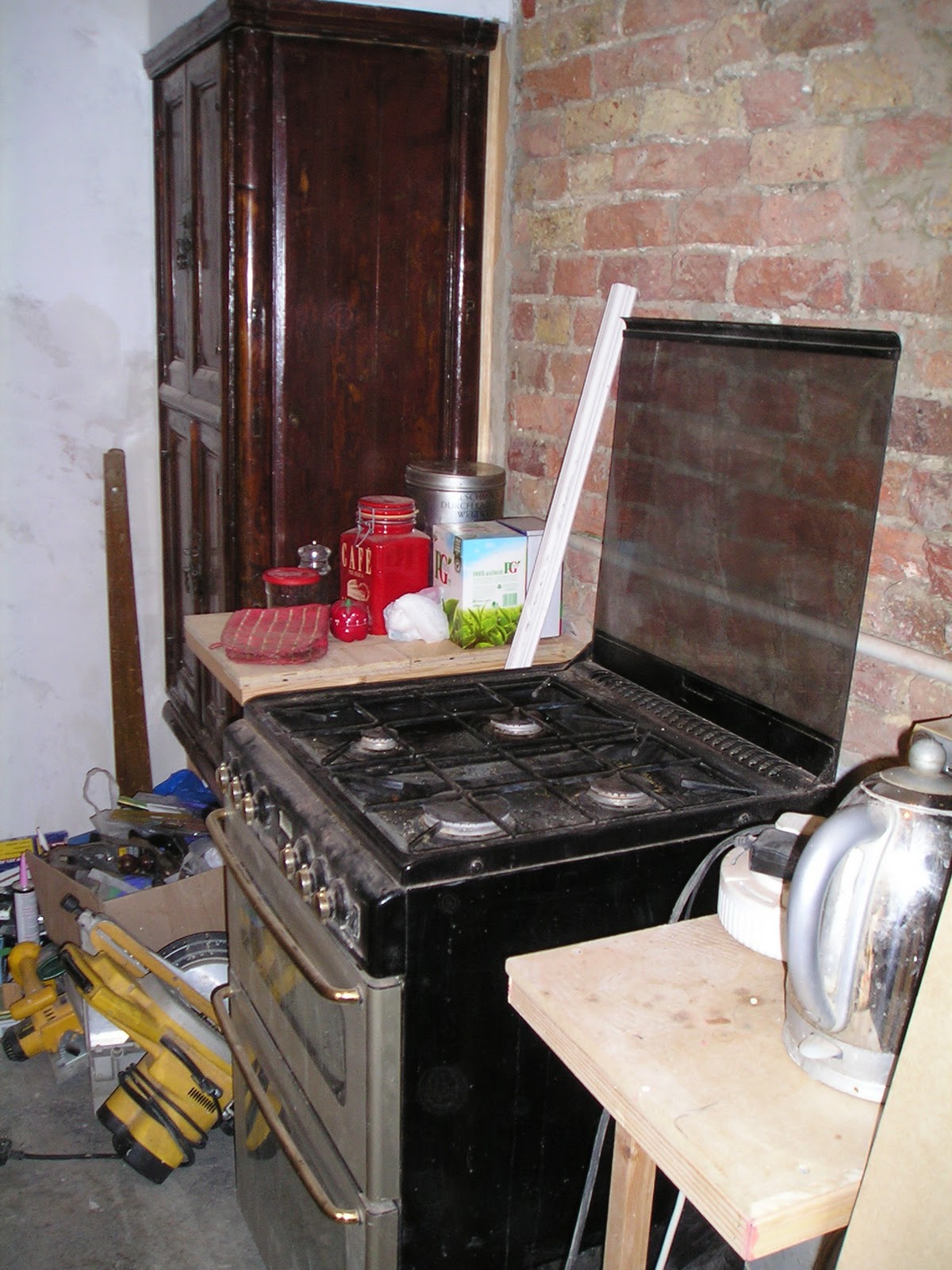
I know, I know… it’s time I gave an update on the progress of my kitchen.  Is it finished yet?  In fact, Jeannie Morrison, my friend and fellow member of the London Symphony Chorus, was kind enough to e-mail before Christmas and to express her hope that I would be enjoying my brand new kitchen at Christmas.  Sorry, Jeannie,  I’m not there yet.

An old Chinese cupboard before its kitchen transformation

The amount of preparation has been prodigious.  The walls have been stripped.  The chimney breast has also been stripped back to the brick work along with a section alongside it.  And because the bricks were in such a poor state, Wills rebuilt part of the chimney breast.  The old sink has been moved round so that the window at the end of the room can be taken out to make way for a door.  And now the new door is in, Wills has started the process of converting the old doorway to a window.  I could carry on – but you get the idea.

You may spot part of the old cupboard as well as
getting a rough idea of the design of the new kitchen

Gary, who spotted a 19th Century Chinese cupboard (rather worse for wear) and saw its potential, has been working miracles with it in the kitchen, creating a cupboard as planned with the central section of the original piece and another wall-to-ceiling cupboard to house the boiler.  If only he’d consent to having his picture taken I might have caught his boyish delight this morning when we discussed just what a success this is proving to be.  And yes, the picture above also gives you some idea of the state of my kitchen at Christmas.  Fortunately, my nephew Edward, who lives with me, was away and – when I was not with friends and family – it was just me at home.  Oh!  Me and the mouse that is!  Seen once but not since.

New appliances are multiplying in the lounge   

Over time, various appliances have been delivered and some of them are biding their time in the lounge.  The new sink has been with me for a while, and now the dishwasher, a new radiator and (I confess) the first proper kitchen bin I have ever owned, are all ready and waiting.  It feels so grown up!

I’m smiling as I write, recognising that I, too, share a good deal of Gary’s childlike glee.  I’m also smiling because I recognise just how many of my friends see this kind of experience as the ultimate nightmare.  I think of Roger Hamilton’s book Your Life, Your Legacy:  An Entrepreneur Guide to Finding Your Flow which I’ve mentioned before on this blog.  Hamilton highlights different ways in which entrepreneurs generate wealth and I know that my own signature approach to generating wealth is primarily creative.  I am loving the creative process of designing the new kitchen.  Even in our private lives our key strengths and preferences show up.  

Embracing my inner diva

Hurrah!  I’m here.  Today I have my first rehearsal in New York for two concerts.

In recent days I have been sharing a joke or two with clients about coming to New York to indulge my inner diva.  I recognise that it’s only relatively recently that I have felt comfortable to own the diva within, because of the negative associations I have with the word.  I remember, for example, singing a number of years ago in a concert with Jessye Norman.  The choir and orchestra members were banished from our normal backstage areas in order to keep our humble germs out of Ms Norman’s breathing space.  This, surely, was the behaviour of a diva.

Today I take a moment to reflect.  What does it mean to be a diva?  I turn to Caroline Myss, whose book Sacred Contracts highlights the presence of archetypes in our lives and explores their implications for our learning.  One of the key messages I took from Myss’s book is that each archetype has a light attribute and a shadow attribute – if you like, the power to do good or the power to do harm in our own lives and to the lives of others.  I was sufficiently intrigued by Myss’s theory that I bought her Archetype Cards and I take a moment to look for the card which relates to the diva.  I am disappointed when I find none.

I turn next to Roger Hamilton’s book Your Life Your Legacy, in which he explores what you might also term archetypes in relation to generating wealth.  I know that one of these archetypes is the first cousin of the diva – the star.  And I also know – because I have completed Hamilton’s on-line diagnostic – that my own star energy is high, second only to my creator energy.  Turning to the brief initial descriptions of each archetype, I read The Creators set the stage, the Stars steal the show.  This, I think, begins to tell me something about my inner diva.

Applying Myss’s concept of the light attribute and the shadow attribute to Hamilton’s description of the wealth profiles I begin to explore the two sides of the diva.  The origins of the word diva are, of course, in the Italian word for a female deity – a goddess.  More recently the word has come to be applied to – as Wikipedia currently has it – a celebrated female singer.  Hamilton says of the star:  Stars get their most valuable feedback in the limelight, and find their flow while on their feet.  As a result, they are able to evolve their attraction on the fly, and it is their personal magnetism that is their greatest value.  The essence of the star is to create a unique brand which attracts others and in this way to touch the lives of many.  For the diva this unique brand centres around singing and performance.  Building on Hamilton and Myss, I recognise the role the diva plays in stepping into the limelight and shining a light out into the world.  She is there to express herself through her singing and in this way to inspire others.

What then, of the shadow attributes of the diva?  The diva in her shadow side can seek to eclipse others for personal gain.  Or she may compromise herself in some way, failing to express her unique brand and in this way eclipsing herself and depriving others of her own kind of leadership.  Perhaps the heart of the shadow attributes of the diva is, by failing fully to embrace her inner diva, to keep herself or others small.

I think back to that backstage experience of Jessye Norman and recognise that it’s not always comfortable to be around a diva, even when she’s doing what she needs to do in order to perform.  Perhaps my own inner diva was challenged in the presence of someone who was so fully embracing and living out her diva identity.

If my own fate includes a strong dose of the inner diva, I wonder, what about yours?


How well are you listening to your customers?

Yeah!  Today I’m flying to New York! I’ll be flying out with members of the London Symphony Chorus to sing in two concerts this week at New York’s Avery Fisher Hall before flying back after our concert on Sunday.  I’ll be back at my desk in time for work on Monday!

Along the way, I had an experience I still find very strange.  And I must confess, it concerns one of my favourite organisations – First Direct.  Over the years, I have regularly taken out travel insurance with them so it seemed quite straightforward to phone them up again, to get put through to their insurers and to renew my insurance.  But no – this is roughly the conversation I had when I spoke to a representative at Aviva:  What’s the purpose of your visit?  I’m going to New York as a member of an amateur chorus to sing in a couple of concerts.  So it’s a professional trip?  No, we’re amateurs – we’re not being paid.  But it’s not leisure…  Well, yes, in my eyes it is – singing is something I do as a hobby.  Quite quickly, I was asked to approach a specialist insurer for this trip.

I found it hard to get any clear explanation about why I would not be insured as a member of the LSC.  I have been insured for business trips under the same policy in the past so even if they were classing this as a professional trip why would this policy not cover it?  I asked the person on the phone what risks he saw that would not also apply on any other leisure trip and he didn’t have an answer.  I decided to let the team at First Direct know I wasn’t happy.  They gave me another number and encouraged me to phone and try again.  The explanation was clearer this time, though I didn’t enjoy it very much.  We don’t class this as a leisure trip because of your singing commitments.  And yes, we do insure people for business trips, but only for work in administration.  I asked if I could check my understanding, expecting to get a simple, yes, that’s right.  Instead, I got another explanation, which seemed to me to be a little longer and still, essentially, the same as the first one.  I could see the risk that we might go round in circles without ever getting to the point where the person talking to me would say, yes, that’s right, these are the reasons why we won’t insure you.

After talking to a few members of the choir (has anyone else had an experience like this?  Who are you insured with for this trip?) I visited my local Post Office, picked up a leaflet for their travel insurance and made a call.  I made sure to check that they really would cover me on my singing trip and the representative seemed rather amused when I told her about my experience with Aviva.  Yes, we’ll cover you for this and other singing trips.

As I sit here and write I am wondering what I needed from Aviva that I didn’t get – recognising that it wasn’t just insurance.  I know I wanted a clear explanation that I could understand – not just that I could understand the words but also that it would make sense to me in a way that the explanation I received just didn’t.  Also I wanted the representatives of the organisation to stand behind their explanation – to act as if it made sense to them.  When I checked my understanding and didn’t get to a clear, yes, that’s right… I found myself wondering if the reasons for the no made sense to the person I was talking to.

And why does this matter?  It matters to me as a customer.  It also matters to Aviva, because customers have a voice – they tell their friends about their experiences, they put it on the internet.  One man, after his guitar was broken in the hands of America’s United Airlines, and having exhausted all the possibilities for raising the issue with them without gaining compensation, wrote a song about it and posted it on YouTube under the heading United Breaks Guitars.  At the time of writing, Dave Carroll’s song has received close to 11,000,000 hits on YouTube.

Mmm… maybe I should write a song about Aviva…

Revisiting our sense of identity

Tuesday evening.  As I write my alarm is set for a 5am start tomorrow, when I’ll be packing my bags to go to Glasgow as a member of the London Symphony Chorus.  We’ll be singing in our fourth out-of-town concert in just two weeks, performing our third work – James MacMillan’s St. John’s Passion.  This is the opening concert of the new season for the BBC Scottish Symphony Orchestra and will be broadcast live on BBC Radio on the evening of Thursday 29th September 2011.

For a few weeks now I have been aware of how busy we’ve been as a choir and this feeling has been all the more intense in recent days as I struggle to find time for the most basic tasks and make jokes about the risk that I shall soon run out of clean underwear.  Today though, I notice something else:  how strong is my sense of identity as a singer right now.

Of course, we all have multiple identities, related to all sorts of activities and relationships in our lives.  At home we may be parents, children, spouses.  At work we may be professionals of some sort, as well as managers, leaders, team members.  Our hobbies confer additional layers of identity.  And then there is the sense of identity that comes with our gender, sexuality and much more besides.

Often, there is an interplay between our sense of our identity and additional layers of truth, so that it’s hard to say with confidence “Yes, this is who I am”.  If we hold too tight to our sense of identity we miss the opportunity to learn and grow.  Our identity as parent becomes stuck at a time when our children were still children, for example, and we miss out on the joys that can come when we allow our relationship to develop as we and our children develop.  At the same time, our sense of identity supports us in the world, acting as a compass or guide.

As we move through our careers there will be times when our sense of identity is one or two steps behind the role we inhabit.  A promotion often leaves us with a sense that, somehow, we don’t belong.  My title is Director of X, Y, Z but who am I to be in this role?  We find ourselves looking over our shoulders and wondering who will be first to notice the incongruity.

The sense of discord (no musical pun intended) is a healthy one because it invites us to explore who we really are.  Is this the right role for me, and if it is, who am I becoming in this role?  And if it’s not, who am I and what role might be right for the person that I am?  At the same time, we may find that layers of identity that were laid down when we were very young – perhaps even laid down by our parents when they were very young and handed down to us – are still in the mix, long after they relate to any objective reality.

It’s time to explore who we have become and who we want to become.  It’s also time to uncouple those things we confuse with who we really are, such as behaviours borne of habit, or the labels we place on ourselves (or others on us).

From another point of view

Friday, 16th September, 2011.

I was up at 4am this morning to travel to Bonn, arriving in my hotel at about 1pm local time.  Having checked into my room my first task is to find the best possible option for making a 90-minute phone call to the US which is scheduled to take place at 6pm.  I’ve already established a cost of about £800.00 from my hotel room and of about £180.00 from my mobile.  There must be a better way.  The hotel point me to a road which has a number of what they call “call shops” and I make my way to find out more.  Entering the first one I come across I find that the cost is less than 14 Euros – about £13.00.

Is it me or is the manner of the man who answers my questions one of irritation?  I know I’m not looking to pay Rolls Royce prices and still, I’d like a little of what some people call “service”.  I leave with the information I need and walk past Beethoven’s birthplace before a hasty lunch and making my way to the Beethovenhalle where I shall be singing in the evening.  I have special dispensation to leave our rehearsal to make my call and I do this.

In the call shop – a kind of internet cafe – I am directed to booth 6 where I make my call, joining colleagues from around the world.  I am perched precariously on a chair which squeaks noisily every time I adjust my position and still, I am able to participate fully.

When I finish the call my time is tight – my concert starts in little more than half an hour and I have to get back to the Beethovenhalle.  Still, it has made a huge difference to me today to find a low-cost way of making this call.  I take a few moments to thank the man and to tell him how much difference it has made to my day.  He seems surprised and we get talking.  “Sind sie Deutsch?” (Are you German?) he asks.  I say no and our conversation takes a new course.  He asks me where I come from and how I came to learn German and I ask the same of him.  He came from Somalia three years ago and has been grappling with the challenges of this language since that time.  When we say goodbye I find I have, without thinking, extended my hand and we shake hands.

I come away with a different perspective.  The grumpy man of the afternoon has become a human being – someone for whom speaking in German poses challenges and someone, too, who is ready to go beyond the strictly transactional and to connect with another human being.  I wonder how much my own diffidence – both about taking out my rusty German and brushing it off and about about asking the questions of the entirely ignorant as I make my first ever visit to a call shop – were factors in my experience in the afternoon.

Either way, as I look at things from a new perspective, everything changes.

Enjoying Beethoven? After the event

Matthew Rose, Paul Groves,  Sarah Connolly and Helena Juntunen

If you’re quick, you can still catch Beethoven’s Missa Solemnis on BBC iPlayer following Sunday’s performance as part of the Prom series – just follow this link.

I say this with a little trepidation – as a member of the London Symphony Chorus I was on the concert platform and feeling just a little anxious on the night so I know I gave a slightly less than optimum performance.  The thought of being seen on screen giving anything less than the perfect performance is not easy for me.

And even as I share this, I am fully aware of the folly of such a high expectation:  performance is, by it’s nature, a bit of a messy business – a perfect entry here, a less than perfect ending there.  To think this way is also a form of vanity – as if the experience of members of the audience depends on me and me alone.  In truth, the end result is the sum of the parts just as it is in any other “workplace”.

If the feedback of friends and family is anything to go by, there was enjoyment to be had regardless of any nerves, mistakes and omissions.  Some played “Spot the Dot”  and others bathed in the magnificence of Beethoven’s music.  And equally, I notice how much – as I watch the recording – I enjoy seeing my colleagues sing and with no thought of any mistakes they may be making.

Such is life!  There is always a gap between our perceptions of ourselves and the perceptions others have of us.  There is, too, the risk that we believe our own story about what others might think.

The mistakes are done and nothing about the performance will change.  Still, there is much to enjoy.  The question is:  will I choose to enjoy it?