Category Archives: About Dorothy

Coming back after a break

I am back at work today after a break.  My niece was with me for two days before Easter, yearning for company and happy to potter in the garden and to curl up with me on the sofa in front of Finding Nemo.  I spent Easter with family, enjoying the greenery and sunshine of rural Berkshire, the sound of the cuckoo as well as time with family members.  I have been away on retreat, too – at Vicky Peirce’s Barn for five days – as well as seeing my brother Alan on the way and my cousin Charles on the way back.  It’s been a packed time.

Emerging from five days on retreat I am stunned to hear news of Osama Bin Laden’s death:  there is only one story right now.  And in a completely different way, I am stunned by the performance of a newcomer in the world of snooker, 21 year old Judd Trump.  Watching the last few frames of the game with my nephew Edward last night I enjoyed the play of both Trump and John Higgins (who took his fourth World Championship crown) and especially enjoyed the grace with which both players acknowledged each other at the end of the match.

Today I am preparing for a busy week ahead – catching up with new messages, e-mails etc. as well as what’s already in the diary.  I have a proposal to write, a feedback session tomorrow with an executive I recently assessed for a senior role in his organisation, another assessment…  I have a yearning for understanding from those who have been waiting to hear from me and who may have to wait a little while yet.

PS  And yes, I did manage to take in a wedding whilst I was away – a particular wedding…
A perfect day

Monday.  Today I am coaching on the phone.  I am tired after a late night – attending the Teaching Awards’ annual national awards ceremony followed by dinner.  I am grateful for the rapport I have with my clients and for the trust that comes with it:  today I may need to call on that rapport as my desire to contribute balances with my body’s yearning for sleep.  I imagine that it doesn’t do to yawn when rapport and trust are absent.

In truth, the activity of coaching is one I love so that my energies quickly rise to meet the occasion.  I enjoy each call and the added value that comes for the client from working in coaching partnership.  (As I write, I recognise how impersonal the word “client” seems to me right now.  These are real people who place their trust in the process of coaching and in me as their coach as we work together to progress the issues and agendas they are grappling with.  Coaching is anything but impersonal.)

Judy, my sister-in-law is staying, too, and has already asked me if I have time for lunch.  I coach until twelve before walking up to Blackheath where I meet Judy and her son – my nephew – Edward at the Handmade Foods Cafe.  We eat outside in the mild November weather, eating our vegetarian curry which is absolutely divine.

Judy asks me if I’d like to walk down to Greenwich and – since I don’t have any calls until the late afternoon – I am free to say yes.  We walk across the Heath and through Greenwich Park.  It strikes me – as it has done already this year – that the colours of Autumn are particularly intense.  Canary Wharf is beautiful in the low Autumn sunshine.  It really is a beautiful day.

We wander around Greenwich taking in a few shops and stopping at Waterstones (there has to be a bookshop involved) before having tea and (in Edward’s case) beer at the Old Brewery.  I am amused – or perhaps bemused – when I find that our common territory (semantics) combines with my own special interests (emotional intelligence and nonviolent communication) as we discuss the finer differences between embarrassment, shame and guilt.  Is it possible to feel these emotions and still have no regrets?

We walk back through Greenwich Park and I leave Judy and Edward to visit the Royal Observatory as I continue home.  I have time to meditate before they return as well as to catch up with some e-mails so that I can start the day tomorrow with a conscience and an in-tray that are both clear.  I also have time to say goodbye to Judy before she leaves to go back home and I pick up the phone for my next call.

Sometimes it helps to balance forward planning with flexibility in the moment if you are to live in the flow of life and to experience the perfect day.

LinkedIn: still keeping in touch

Time moves on.  In August of last year I reported 49 connections on LinkedIn and still growing.  As I write today the number has gone up to 180.

This is an interesting number.  On the one hand, there is a good number of people I know with whom I am not (yet) LinkedIn.  On the other hand, I am starting to have invitations to LinkIn from people who have enjoyed my postings on the groups to which I belong and I don’t yet know quite how to respond.

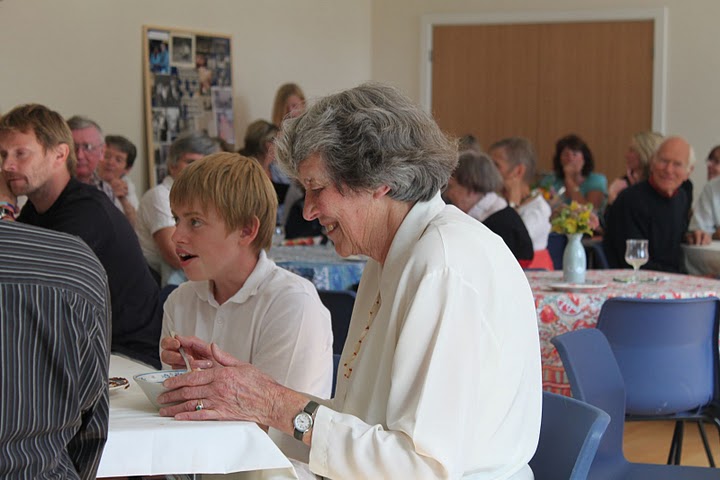
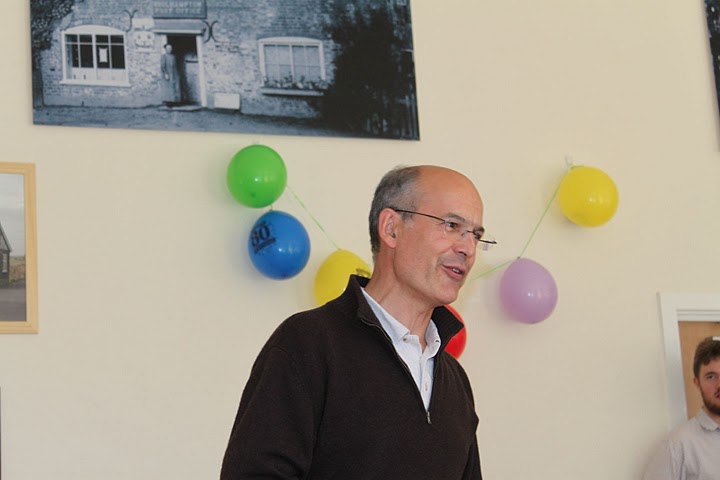
One thing I have enjoyed is connecting via LinkedIn with people I have known personally.  Meeting in this way enriches my understanding of them, helping me to see them in the round – something I cherish.  Xavier Dujoncquoy is one of these.  Xavier used to stay with my family as a young man and joined us on Saturday to celebrate my mother’s 80th birthday.  Here’s Xavier speaking about his memories of those days – and my mother listening.

It was a wonderful day.

In the spirit of celebration

What do you do when you’ve topped your career by winning a lifetime achievement award?  Tony Maxwell, national winner in 2003 of the Teaching Award’s Award for Lifetime Achievement returned to roots he first laid down in the ’60s, when he sang and played guitar and harmonica in Manchester as a member of the band The Sink.  Following his retirement from 37 years at St Michael’s RC Secondary School, Stockton-on-Tees, including eight years as Head Teacher, Tony took up the opportunity to appear at the Hartlepool Jazz Club and responded to requests for a CD of his music by recording a disc with the Jeremy McMurray Quartet.  His decision to contribute any profits to the Help for Heroes charity reflects the spirit of public service which is so often seen amongst Teaching Awards winners.

Tony gives a brief plug to this project at the beginning of the Teaching Awards’ national judges meeting, before we begin the business of the day.  Today’s meeting is the culmination of the 2010 judging process.  Judges have read thousands of nominations and visited schools across the country to determine the regional winners for 2010 and awards ceremonies have been held in each of the country’s seven regions.  Judges at national level have selected their winners from the region’s winners and we are ready to share our decisions with our colleagues on the judging panel.  The winners will, of course, be announced at the national awards ceremony at the end of October.

The panel meeting is unlike meetings I have attended elsewhere in my life.  The focus is on the many aspects of regional winners’ contribution that were celebrated at regional level and it’s clear that the national judging teams have struggled at times to place the metaphorical cigarette paper between regional finalists to decide on the national winner.  I experience a rush of fellow feeling when one of my colleagues on the panel shares how he “blubs so much more easily” now that he is older and another colleague describes a moment on one visit when she was moved to tears.  As the meeting progresses the sense of celebration builds around the room and I find myself wondering, as I leave the meeeting, how would life be different if it were in our wider culture to look for the things that are working and celebrate them as we have been doing here today?

I am aware that the Teaching Awards is offering an opportunity for celebration and, in this way, opening up possibilities for a shift both in our culture in schools and in our wider culture.  As Tony Maxwell says about the music he has chosen to record on his CD:  “The world is there to be changed and there is no age barrier to being involved in that process”.

I look forward to seeing you at the Awards ceremony in October.


Making my first visit to Belfast

Occasionally my commitments take me beyond the boundaries of London where I live and mainly work to other parts of the UK and Ireland and this is where I was last week, making my first ever visit to Belfast.

I was there to visit the LILAC Team at Fleming Fulton School, who provide highly tailored support to schools across Northern Ireland to help them to meet the needs of children with various physical disabilities:  to enable access to the full experience of education, to support their achievement in school and to prepare them for life after school.  My visit was one of a series of visits to schools across Great Britain in my role as national judge on behalf of the Teaching Awards.

This was part of a process by which judges decide on the national winner for this year in the category of Outstanding School Team of the Year.  Following our visit we hole up in our hotel, the Park Avenue Hotel, to make our final decision.  I return to London to write a report on behalf of the team.  We will share this with our fellow judges at the end of next week.  After this, it will be under wraps until the national awards ceremony in October.

I am pleased to be able to make a flying visit to the City as a whole with one of my judging colleagues.  Following our arrival and on the way to dinner we ask our taxi driver to give us a quick guided tour of the City.  It is much changed since my colleague last visited some years ago.  “The Troubles” are mainly past and many of the old walls have come down.  Some remain and act as stark reminders of years gone by.

I am intrigued when our driver shows us a place where children still come to throw stones at each other across sectarian divides.  He tells us that he knows they text each other in advance to say that they are coming.  I wonder what needs are met by this strange ritual.  Perhaps they are honouring the past and in doing so honouring their parents.  Perhaps this is the way they have learnt to engage with each other.  Perhaps… perhaps…

I come away with a great curiosity about the city which clearly has a great deal to offer the visitor including and beyond its history of 20th century divide.  I also celebrate the LILAC team and all the other teams we have been able to observe at regional and national level on behalf of the Teaching Awards. 

Des Lichts und Lebens Quelle

Sometimes, the experience of singing is so rich that it’s hard to know what to write following a concert – so many threads to be followed, so much that could be said.

Of our concert on Sunday (Haydn’s Seasons) it’s true to say that I didn’t anticipate at the beginning of our rehearsal schedule the joy I would experience in singing this piece for the first time, as the early grind and impossible “note bashing” of our early rehearsals (“will I ever get my head around this piece?”) gave place in time to the deep delights of performing it under the beloved baton of Sir Colin Davis and alongside the exquisite singing of our three young soloists, Miah Perrson, Jeremy Ovenden and Andrew Foster-Williams.

It is not unusual, when we sing a piece that is not part of our ongoing repertoire, for the chorus to come to our first rehearsal with the conductor with anxieties about our preparedness.  This was true last week when it seemed to us that there were corners of the piece we had barely sung before.  And still, during our final week we rehearsed every day and grew in confidence.  And when we grow in confidence we often grow to love the piece we are singing as I did Haydn’s Seasons.

There were moments of humour, too.  When we sang our pleas for rescue from the summer storm (“Wo ist Rettung!”) our dramatic intent was just a little too dramatic for Joseph Cullen, our Chorus Director, who reminded the sopranos that we were not singing Tosca.  Sheepishly, a number of us confessed to each other during our break that we wondered if this remark was addressed at us (“was it me?”)  And because I know I have one of the larger voices of the section I was quite happy to come back after a rehearsal break to find a leaflet for Tosca perched on my score (thanks, Eileen!) and to pipe down just a little when Joseph let me know that yes, I could be heard above the rest of the section.

It would be a great omission to write without mentioning our regular partners, the London Symphony Orchestra.  I particularly noticed the commitment of the orchestra’s leader who could be seen (and heard) practising some of the intricacies of the piece in the breaks and whose exhortations to the players revealed a passion to go way beyond simply playing the right notes at the right time.  (If only our national football team could play under such a coach!)

Our own coaching included some fine tuning by Norbert who brought a singer’s understanding of what it takes to project the German text as well as a native speaker’s knowledge of the language.  Amongst the vocal coaches we have worked with Norbert stands out as being both fun and effective to work with.

So, as I write, I am still singing extracts from this piece I have come to know and love in recent weeks and I find myself relfecting on the deep sense of priviledge I continue to feel after half a lifetime (yes, half my lifetime) of singing as a member of the London Symphony Chorus.

Even as I yearn to catch up with last week’s sleep deficit, my gratitude is heartfelt.


From bright future to glittering present: Robin Ticciati

Sometimes, I have reasons to remember a concert long after it has passed so that a light touch in the present evokes my memories of years gone by.

One concert that remains vivid in my memory is a performance of Mahler’s 8th Symphony in which I sang as a member of the London Symphony Chorus in 2001 – or thereabouts. We sang in the Birmingham Symphony Hall under the baton of Sir Simon Rattle and alongside the National Youth Orchestra.

It was a special occasion for me because my nephew, Edward Nesbit, was a young composer that year with the National Youth Orchestra, a sign that his early interest in composing held some promise and (I confess) a matter of auntly pride. It was also a pleasure, as always, to have the opportunity to catch up with Paul Keene, who is Director of Programming and Projects at Symphony Hall. I sang under Paul’s baton as a member of the Peterhouse Chapel Choir during my days at Cambridge.

There is another memory that is vivid in my mind from that day. I suspect that other members of the chorus will remember it, too. In the midst of our tutti rehearsal, Sir Simon Rattle asked a member of the orchestra to take his place at the podium so that he could step back and listen to the orchestra. As Rattle walked back into the depths of the hall the young timpanist, Robin Ticciati, took up the baton and conducted. Even as I write I feel the goosebumps that I felt then at the realisation that this was a young man whose bright future was already visible – something to be nurtured and celebrated.

Times move on. My nephew, Edward, has continued the courageous and uncertain path of a composer and is currently studying at Kings College, London. You can read about him and hear some of his music at www.edwardnesbit.com. And on Thursday 25th March, Robin Ticciati will be making his LSO debut at the Barbican, conducting Sibelius, Lindberg and Grieg.

I’ll be there.

Paying it forward

It’s not often I have cause to mention my local supermarket on my blog, even though I am cared for like a princess by staff who see me pop in on a regular basis. Today, though, I am celebrating the law of unintended consequences and an opportunity to ‘pay it forward’.

Now, in case you haven’t come across the ‘pay it forward’ idea, I commend you to watch the film of the same name with Kevin Spacey, Helen Hunt and Haley Joel Osment. In this film a young boy comes up with the idea as his response to his teacher’s invitation to students to create something that will make the world a better place. The idea? Do someone a favour and ask them not to pay it back but to pay it forward.

Now, when I first saw this film, the young man who served me at my local video rental shop (those were the days!) gave me a very strange look and – if I remember rightly – described the film as decidedly “cheesy”. Needless to say I didn’t tell him that I was planning to watch it as one of our optional “homeworks” with fellow students on my NLP Practitioner programme.

But what of my local supermarket? Well, if you shop at Sainsbury’s and you are a Nectar Card holder you may have noticed the recent introduction of a natty little box that dispenses small slips of paper with special offers when you pay for your shopping. More than once, my special offer has been an inducement to spend £40.00 or more – something I rarely do given that I live so close and hardly ever do a “big shop”.

Yesterday I had one of these slips in my purse when I popped in to Sainsbury’s. I knew it was reaching its sell-by date and I had only a small number of things to buy so I was delighted to offer it to the woman in front of me at the check-out. This meant that she got £4.00 off her shopping – about 10% – and I had the satisfaction of knowing that this little slip of paper didn’t end up unused in my bin.

Now, it’s a strange thing, but I sense that the impact of this small gesture on both of us – who knows, maybe even on those who observed it – was disproportionate to its monetary value. The woman offered to pay me the £4.00 she’d saved and I was delighted to say no – all the more so because I could see she was doing the family shop. She was clearly touched by the kindness of a stranger. I was touched in turn knowing I had made this gesture and been seen. And when two strangers show kindness to each other, the world always becomes a safer more comfortable place.

What of Sainsbury’s? I am guessing that this interaction isn’t what they planned when they set up their boxes full of inducements to buy. And still, I’d like to think that if their marketeers were sitting round imagining the impact on local communities of many ‘brief encounters’ like this one, they might chose to say, “yes! let’s do this and celebrate our role in making the world a better place!”

Sometimes, it’s all in the framing

Show me a man who says he doesn’t like classical music and I’ll show you someone who doesn’t yet know what he likes. Why else would ‘Carmina Burana’ be so widely used by advertisers and television producers? Why else were the ‘three tenors’ so popular when they came together in 1994 to sing in concert?

We all like classical music. As a member of the London Symphony Chorus I can tell you that you wouldn’t always know it when you’re in the concert hall at the Barbican: so many audiences are white, middle aged and middle class (yes, I guess that’s me!) It’s hardly a representative cross-section of our deliciously diverse population.

So I loved the video that reached me this week (thanks, Arabella!) of a live opera performance in a market in Spain, the Opera en el Mercado. I confess that to watch it touched me – brought tears to my eyes.

And I smiled to read the banner which was raised at the end of this brief performance: Ves como te gusta la opera? See how you like opera?

Sometimes, it’s all in the framing.

Singing with passion

Performing the world premiere performance, in April 2008, of James MacMillan’s St. John Passion was an exhilarating experience – how often does one get to perform a work of such magnitude knowing that every single performer is performing it for the very first time? MacMillan’s rhythms terrified me, his harmonies challenged and at times entranced me, the rich textures of his music stimulated as many responses as there were chorus members across the London Symphony Chorus.

Returning two years later to rehearse this piece marked the beginning of an altogether different experience. For whilst the piece is no easier to master second time around, it has something of the ‘known quantity’ about it. By the time we embarked on our tutti rehearsals with Sir Colin Davis and the London Symphony Orchestra I had a sense of confidence – not so much that I would get everything right but that, at least, I knew what I could handle and where my challenges lay.

By Sunday’s performance I was delighted to discover that there were passages I could sing almost by heart, leaving me free to keep eyes glued to Sir Colin’s beat as he guided us through MacMillan’s alternate accelerandi and rallentandi. And with less energy metabolising in the form of sheer fear, my attentions were able to wander more broadly across the music and my experience of it.

I am no music critic. And so I say with all humility how much I admire MacMillan’s ability to echo the tradition and beauty of liturgical chant through his setting of the narrative for a small chamber choir whilst also bringing great drama and a thoroughly modern idiom to the orchestra and to the voices rendered by the large chorus. This is a work of great beauty and dramatic intensity. Midway through the concert I suddenly recognise the likelihood that this will, in years to come, inhabit a place in the repertoire alongside many other choral greats.

And as I write I reflect on what it takes to embark on the path MacMillan has followed let alone to have reached this point, recognising the deep commitment that is needed to tread this path and how little certainty there is of finding one’s way. For this act of faith – and for the many small acts of faith that follow on from this single act or decision – I celebrate MacMillan, alongside those composers who precede him and those who are already following him.