Saying goodbye to 2011

Today I post my last post of 2011 before enjoying a full ten days’ holiday.  My first posting of 2012 (and my second, and third…) is already written and scheduled for publication.

In the period prior to Christmas I have been sharing tales of my new kitchen and these continue.  The process has been slower than I anticipated (and I knew it would be slow) with the usual knock-on effect of unanticipated delays.  In particular, the new door to the back of the house has not yet arrived which means that the current back door has to be kept in use.  This, in turn, means delaying the conversion of this back door to a window and – until this conversion can take place – building the units along the side wall.

It’s a curious reminder of one of life’s inconvenient truths:  sometimes things just take longer than we anticipate.  When we understand this we can bring compassion and humour and adapt to new realities – though some prefer to find someone to blame than to accept what is true.  It seems to me that it’s a good thing to be reminded of this truth as we enter a time of reflection – moving from the end of one year to the beginning of another.

So, I close by reiterating my best wishes to you for the end of 2011 and for 2012.  And by sharing just a few photos from the kitchen at 14 Albion Way.

So much of the kitchen is currently in the dining room…


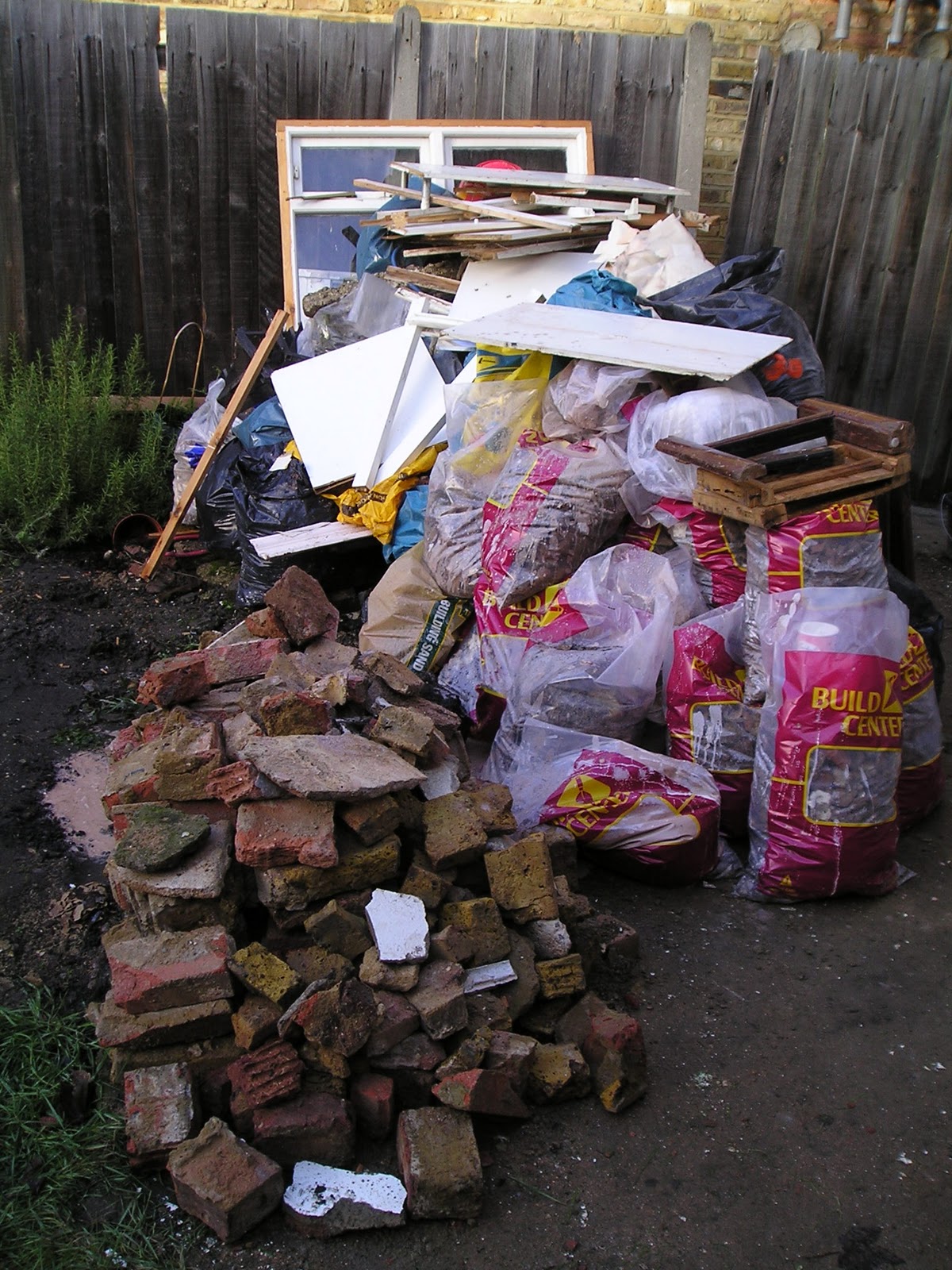
…or outside in the garden…


…whilst work in the kitchen goes on

Sending seasons greetings

The year is drawing to a close.  I am grateful that my work is quieter than usual in the week leading to Christmas, especially as the work in my kitchen continues.  It’s been a challenge to work effectively against a backdrop of noise and dust.

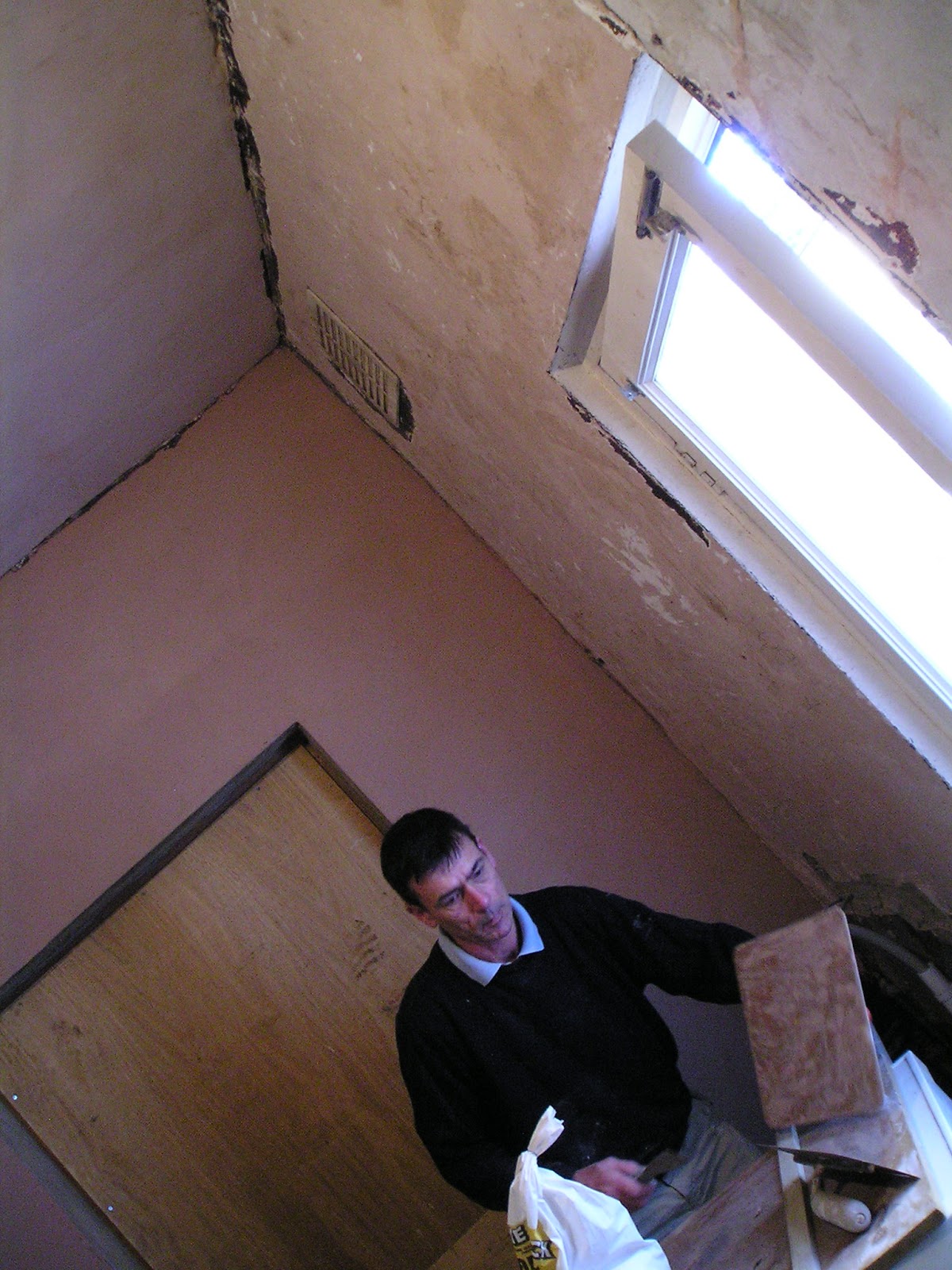
The work is, though, turning a corner.  Some of the noisiest work – stripping back the fireplace and making a hole for a new back door – is done now.  Wills has been plastering the new ceiling which gives a first glimpse of the kitchen as it will be in future.

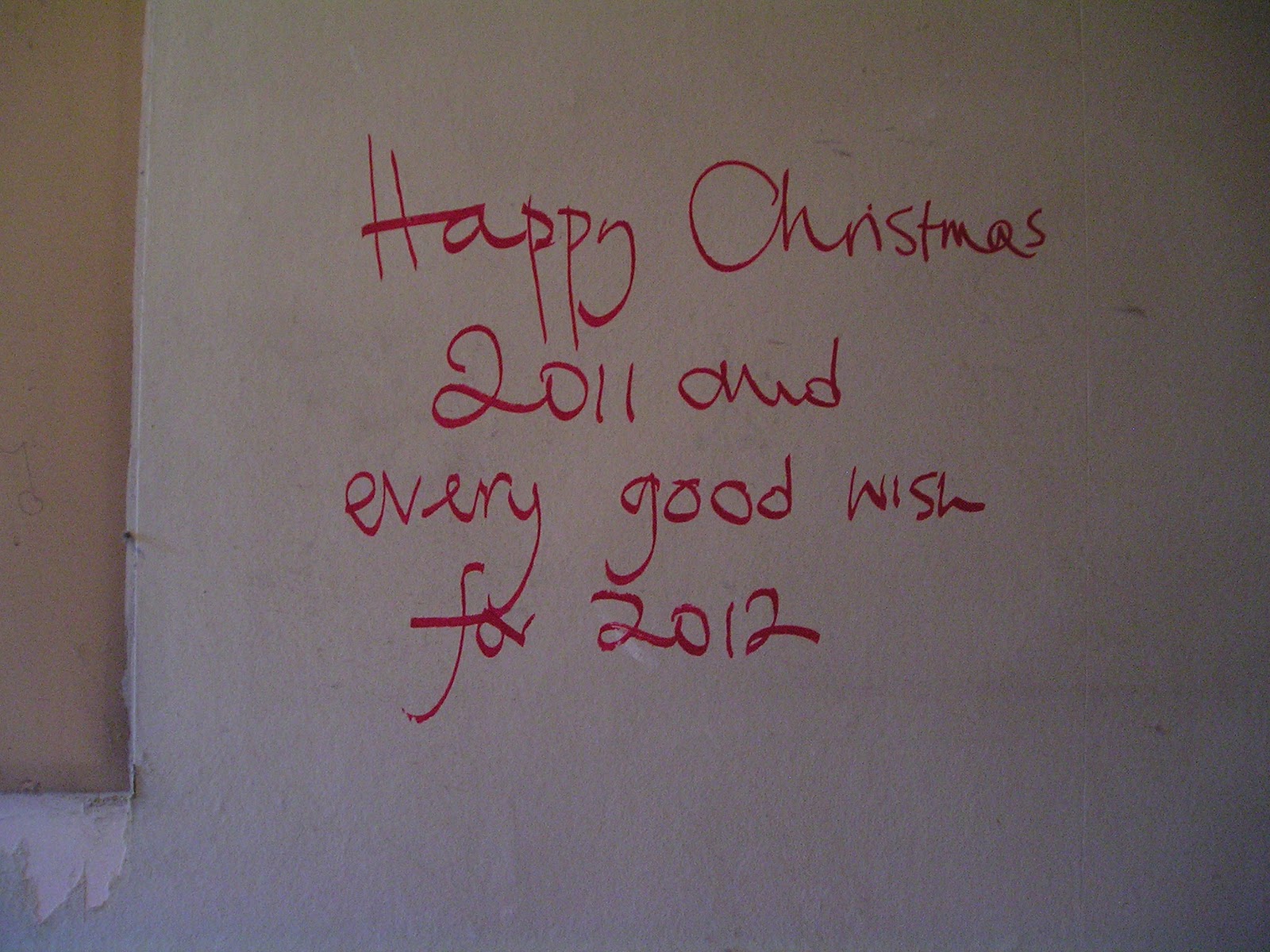
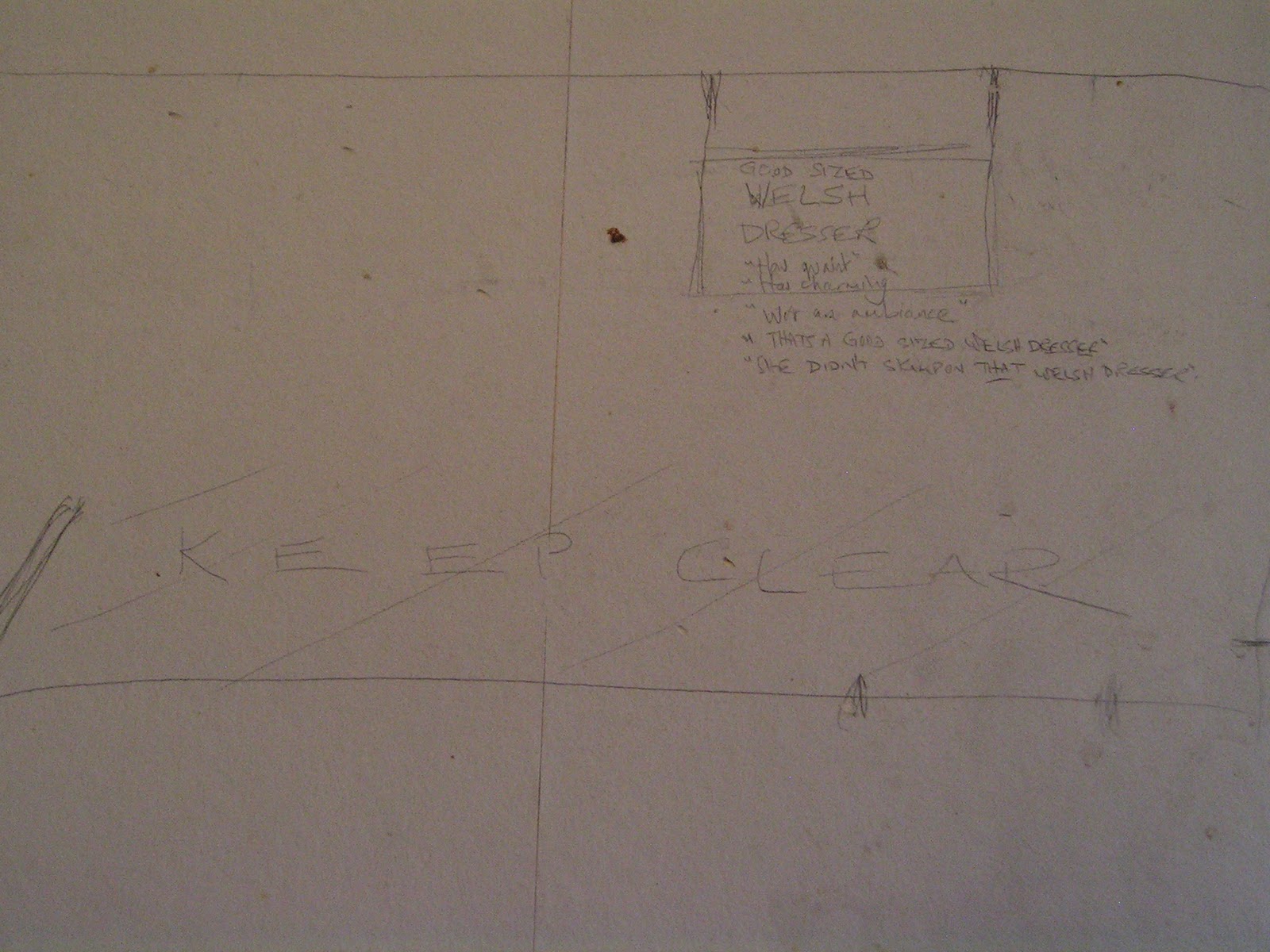
In the midst of a busy day I take a moment to think of all the people who – well, people – my life.  I have been busy sending cards and greetings and still, this is not enough to reach everyone who matters to me.  I feel playful, and take the opportunity to write my good wishes on the last of the old paper in the kitchen.  Soon it will be gone, though my good wishes remain.

In words often attributed to Confucius (see this interesting explanation of the origins of the phrase) we do indeed live in interesting times.  Our futures – individual and shared – are uncertain.  The kind of material prosperity we have come to take for granted may or may not be ours – may be some of ours but not all of ours – in the years ahead.  As I write I wish you prosperity of other kinds – prosperity in your own resourcefulness, spiritual prosperity, prosperity of wisdom, prosperity in love, friendship and the richness of emotions experienced fully as well as prosperity of many other kinds.  May you find you have everything you need to enjoy 2012, whatever it may bring you.  

Helping leaders who want to take some of the hard work out of achieving results

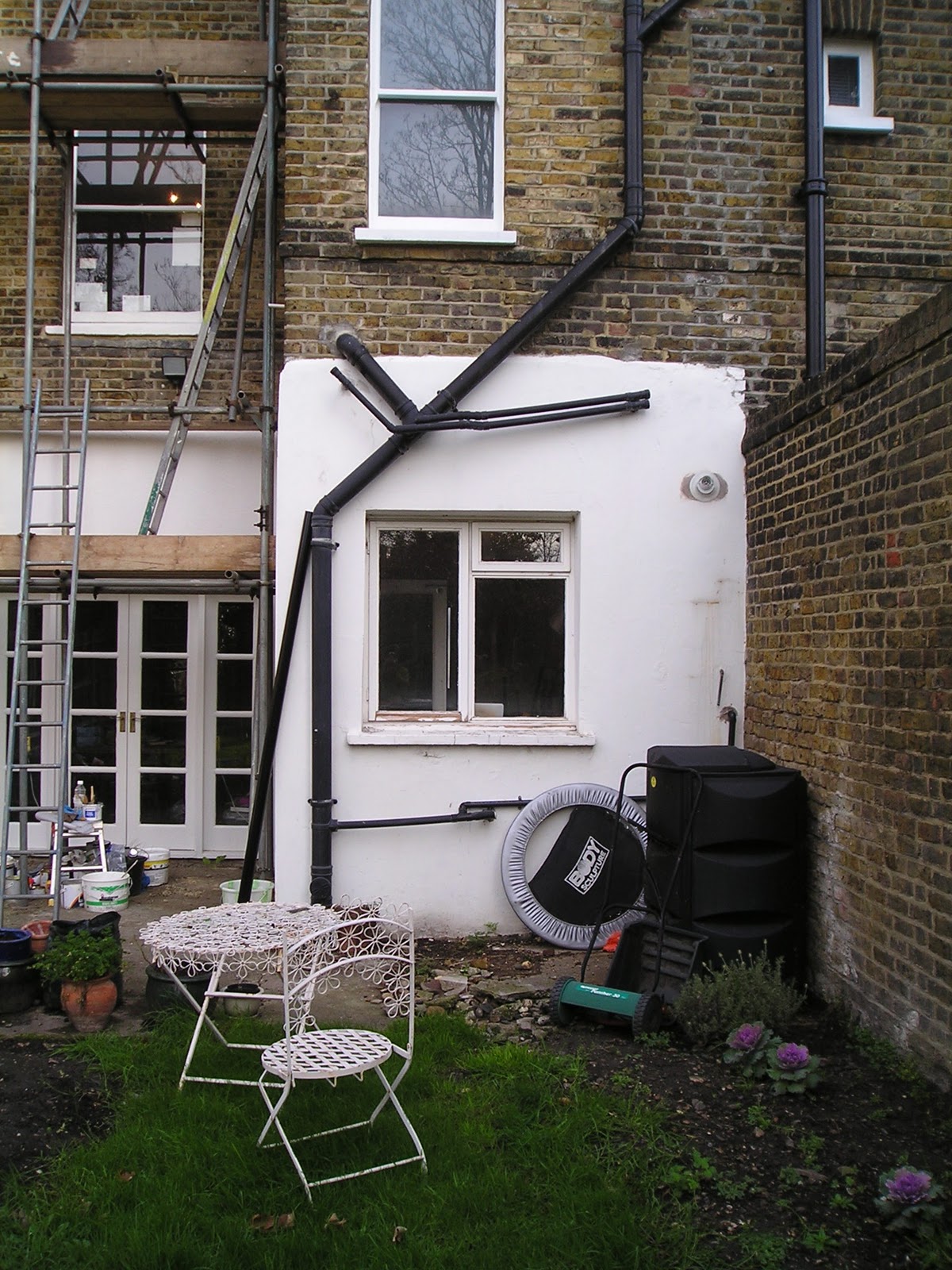
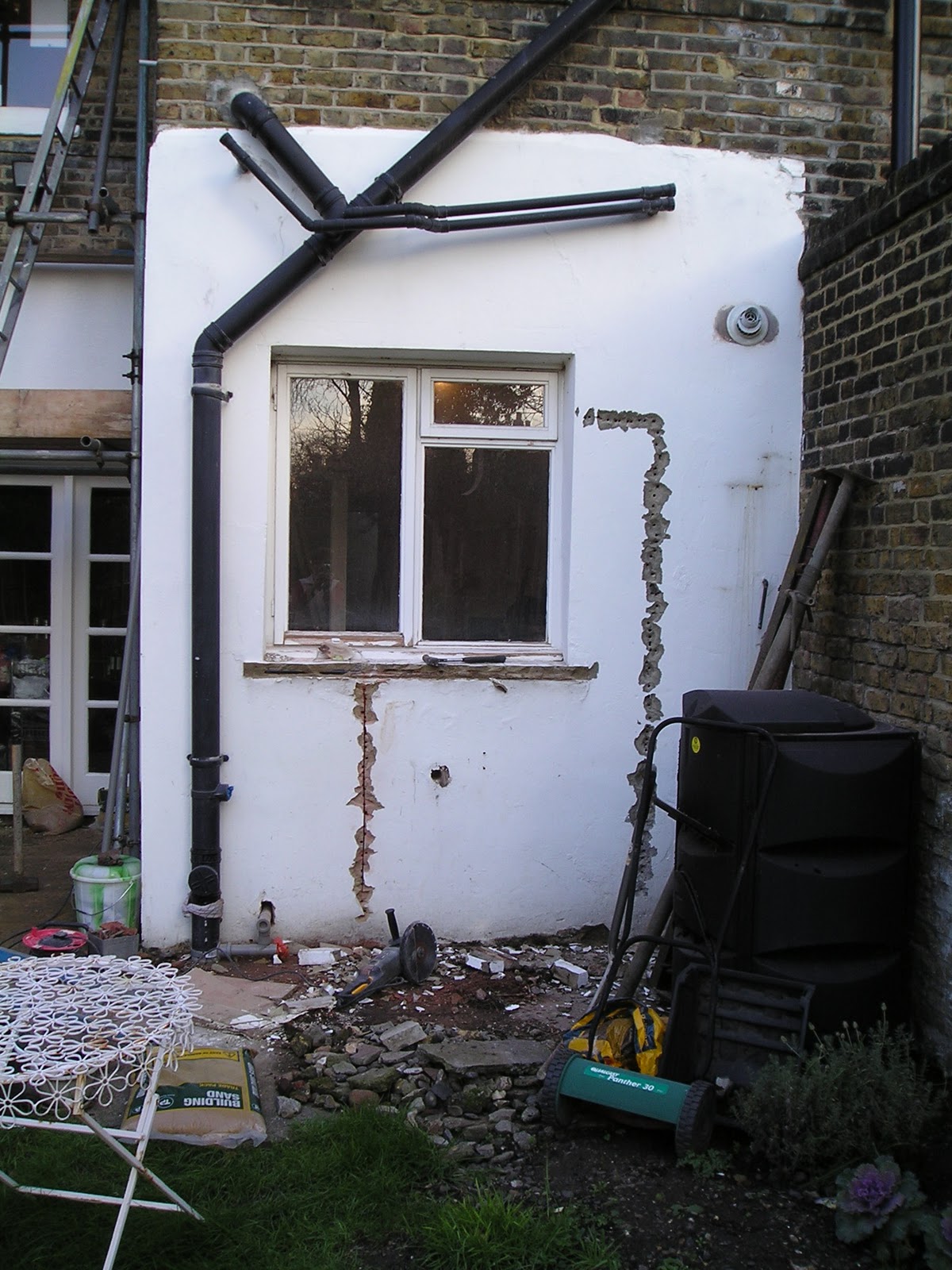
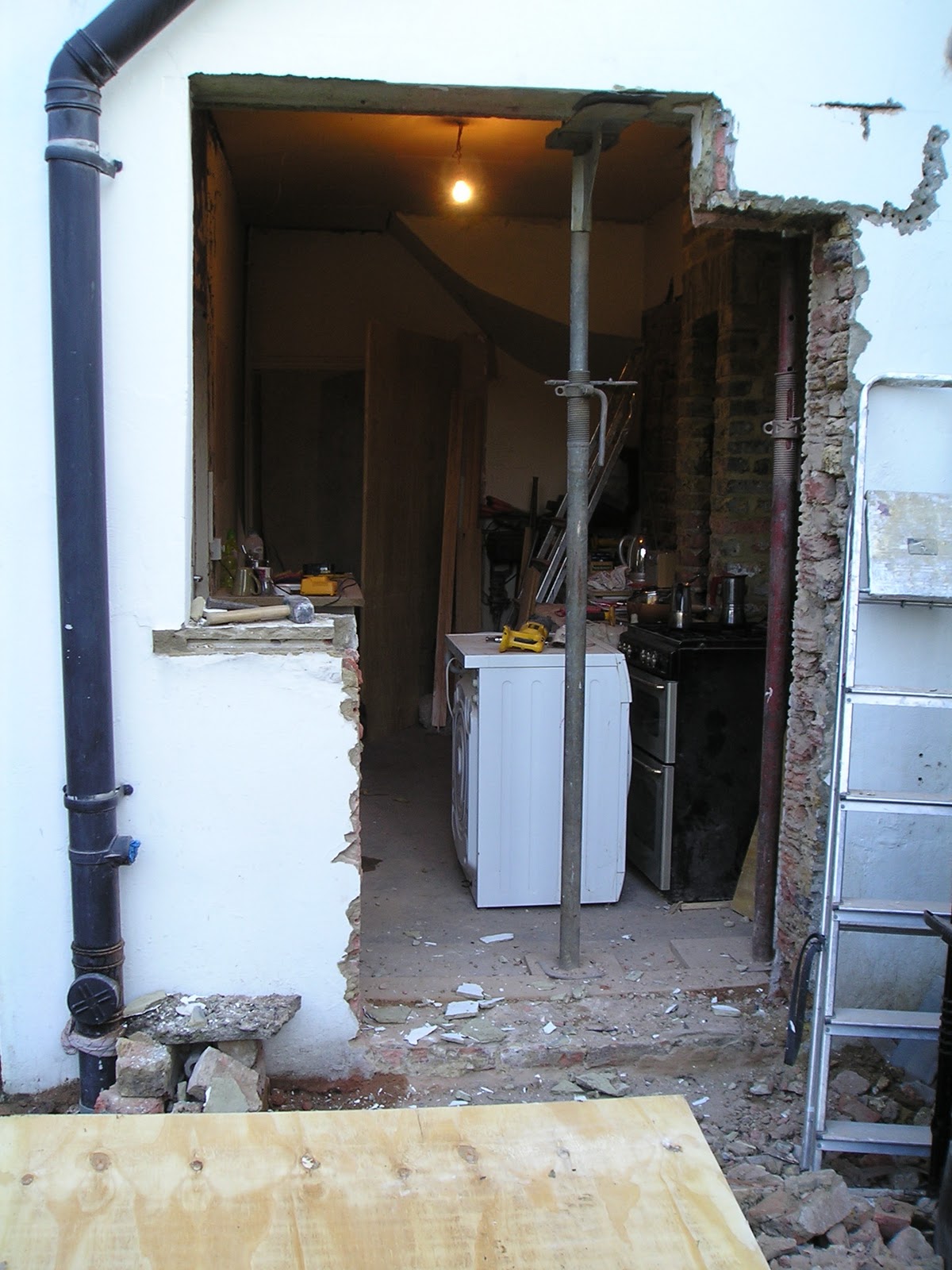
It’s still all change at 14 Albion Way.  The back of the house is changing dramatically as the kitchen window is replaced with doors.

This week Wills has been removing brick work so that on Wednesday night I slept with a hole in the back of the house.  It was covered with large sheets of board, which made me realise just how much insulation the bricks provide.

Yesterday (Thursday) morning the window came out leaving the kitchen exposed to the elements.  Leaving the house at 11am to conduct an assessment I dusted myself off – the dust is everywhere! – and walked away not knowing quite how much progress would be made during the day.  I was, though, confident that supper would be very simple!

I started this series of postings with the intention of celebrating so many people who have contributed to my life since I set up my own business in 2002.  Today I am celebrating Jason Stein at Heart of Business in the US.  Jason has been an extraordinary source of support this year as I explore how best to market my work.  I want to make it easy and simple for those people to find me who most value my help.  With Jason’s help I have come to the simple statement to describe my niche:  that I help leaders who want to take some of the hard work out of achieving results.  It’s so simple that I have been hesitating to put it out there.

I wonder, how does it land with you?

Taking a moment to reflect

The kitchen is not photogenic right now.  The kitchen sink has been moved temporarily.  There will be a new sink in the position it now holds – but not yet.  The fridge has also been moved though not yet to the position that will be occupied by the new (larger) fridge.  Gary and Wills are rearranging the plumbing to be ready for the new layout.  They have also been building the frame of the new door that will be at the end of the kitchen.  This is the stage where the old kitchen has largely been dismantled and foundations are being laid for the future building of the new kitchen.

I have been happily working around this, though it does present challenges.  Gary and Wills have been understanding about the need at times to avoid the noisy work so that I can field coaching calls.  At times I, too, need to understand that in my normally peaceful home office I will hear the background noise of a kitchen in progress and field the occasional interruption.  As I write I hear the noise of a drill.  We are getting clever about filling the kettle ahead of turning the water off and I am enjoying the excuse to nip out at lunch for a sandwich (though M&S’ salmon and cucumber is beginning to wane).

I have adapted my pattern of work to some degree and am going gently on myself:  this is not the time for radical new thinking or for projects that demand deep concentration.  Instead, I take a moment to reflect.

I am so blessed in my work.  Yesterday the opportunity to explore with one client her response to the conclusions of an assessment I conducted recently – and this in the supportive frame of helping her to progress her career.  The day before working in partnership with coaching clients, fielding and and working with whatever comes.  Some are looking for practical ways forward with the knotty issues of their lives as leaders. Others are looking for someone to witness and support their inner process.  All are looking to move forward in their lives.  It is still amazing to me that I can be paid to do something I feel deeply privileged to do.

As I sit and reflect – and even in the midst of drilling and background banter – I sink into the experience of needs met.  In this moment I feel a deep sense of gratitude and peace.  It’s always available to me.

Meet the workers

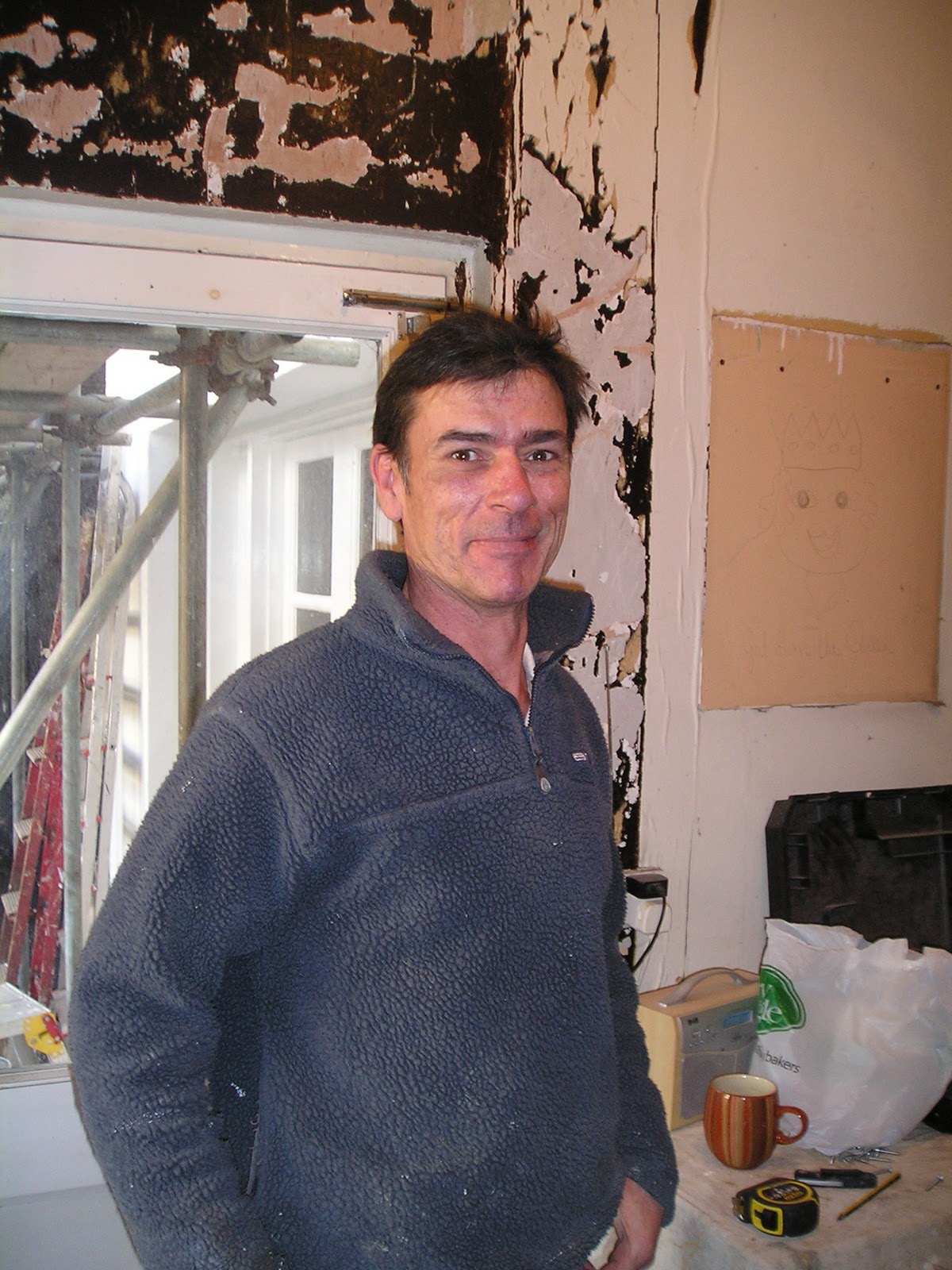
In recent days, I have been writing about progress in my kitchen.  Today, I thought it’s time to introduce the workers – Gary and Wills.


Gary – camera shy – is nonetheless in the house

Gary has proven rather camera-shy, so I offer this photo of his coat and scarf, sitting in the dining room.  I first met Gary in the late 80s when I was furnishing my first home and he had a furniture shop in Blackheath.  Stripped pine was all the rage – the cupboard in the photo is one I bought from Gary.  Later, he closed his shop and started to offer his skills in the home.  Painter and decorator is definitely too narrow a label.  Interior designer is a label Gary shuns.  Nonetheless, he combines a talent for design with a vast array of practical skills.

Amongst the moments I have most enjoyed in working with Gary are those moments where we disagree.  I think “you can’t possibly strip back a wall to the bare bricks” but Gary says “let’s try it and see – we can always plaster over it if you don’t like it”.  We do, and the effect is wonderful.  Gary says, “You can’t possibly paint a bathroom purple” and here, too, we try it and see – my deep purple bathroom has often been admired in recent years.  I recognise that my creative self is well and truly indulged in the process of working together and balanced with Gary’s creativity, wealth of experience and practical skills.

Wills – Gary’s co-worker and right hand man

Wills is less camera-shy.  He and Gary are working together in my kitchen as they have done in the past.  Wills is hard-working, diligent and easy to get along with.  Last week I enjoyed watching Wills open up the fire-place and I appreciate the care he has taken to minimise the passage of dust into the rest of the house.  He and Gary seem to me like brothers – Gary, especially knows how to “wind up” his work companion and Wills seems easily to take the bate.  I enjoy having them in the house.

In the spirit of celebrating, I take a moment to reflect on how deeply in I trust Gary and how much I appreciate his contribution in my life.  It’s not just that I enjoy the work he does for me – which alone would be enough.  He has been a key-holder of my home for the last twenty years, as he has of many other clients.  His work contributes to my need for beauty and creativity.  I enjoy his sense of fun and play.  I love having practical support.

If only it were not so early in the morning, I might want to raise a glass to Gary and Wills.

Making the successful senior hire

This posting appears today as a guest posting on http://scrivrec.blogspot.com and is written for all clients who want to get it right when hiring at senior levels.
Recently I had a feedback session with someone (let’s call him John) I assessed for a senior role in a client organisation.  I had highlighted to my client organisation that John showed long-term development needs in areas key to success so he didn’t get the job.  What I didn’t know ahead of our feedback meeting was that, prior to our interview, my clients had pretty much told him the job was in the bag.  It didn’t make for an easy start to our discussion.
The impact of making – or failing to make – a successful senior hire can readily be counted in pounds, shillings and pence.  The man or woman who is well-suited to their new job brings a fresh eye, seeking to understand where their part of an organisation needs to go and how to get there given where they’re starting from.  The early results include double-figure percentage improvements in key areas – such things as employee engagement, sales, profits or customer satisfaction.
Contrast this with the costs of getting it wrong.  These can include the slow demise of key areas of the business as chaos sets in and staff slowly bed into a new and ineffective approach – or leave.  They can include the gradual seepage of poor results from the area under a leader’s control to connected areas, as sales start to reduce in response to poor delivery times, for example.  They can include major opportunities that are simply overlooked by the man or woman in charge.  They include the costs of managing an individual and even of managing him or her out of the business and recruiting again.
In short, when you make a senior hire, you need to get it right.  My aim in this posting is to give you some clear and simple tips for doing just that.
Clarify your aims
The more you know what you want from your new hire, the more likely you are to get it.  Before you dust off the job description of your departing leader, take a long, hard look at your organisation today.  What are the challenges currently faced by your organisation, for example?  And to what extent is your organisation designed to meet today’s challenges?  (Is it time to re-shape the job, to re-grade it, or even to get rid of it altogether?)  What other factors do you need to take into account?  (These might include the need to create a diverse team at senior level or your organisation’s real appetite for change – it’s surprisingly common to see organisations invest an agenda for change in just one job and to wonder why a talented new hire flounders in the face of so much resistance).  Only when you’ve explored these – and other – questions is it time to move to the next step.
The next step includes shaping a clear job description, person description and critical success factors for the new hire.  If you’ve thought carefully about the job, writing the job description should be easy and effective, identifying the over-arching purpose of the job and five to eight key areas of accountability.  Just one page should do it – clarity reduces as length increases.  Understanding the competencies needed for the job requires a sound grasp of what it takes to succeed.  Defining critical success factors serves to highlight the particular aspirations of the hiring manager.
Take care not to over-egg what’s needed.  I remember being tasked with assessing candidates for one organisation’s first HR Director role.  Their aspirations for someone at the leading edge of HR thinking seemed way beyond what was needed in an organisation that needed initially to get the basics right.  It also seemed unlikely that they would attract the person they described.  They didn’t, with the effect that their new incumbent started his new job with an uneasy sense that he wasn’t what they wanted, even though he was perfectly well-suited to the job that needed to be done.
Get the right (wo)man on board
There’s an area of competence that just isn’t mine when it comes to getting the right (wo)man on board.  This is the area of generating a number of likely candidates for the job.  Often, my clients use head-hunters for this purpose and, at times, I’m horrified by poor quality of the results – it surprises me that so few head-hunters have skills in assessing the capability of the candidates they put forward.  The bottom line is this:  whatever your process for generating candidates, you need to know you have a sound approach in place to test their suitability for the job.
One way of thinking about this is to ask yourself what steps you have in place and what purpose they serve as you seek to assess the suitability of each candidate.  An interview with the hiring manager is essential, for example, to test the chemistry between candidates and their potential future boss, though it’s unlikely to be sufficient to test the competency of your candidates.  Equally, as well as having a way to assess the capability of key candidates for the role for which they have applied, you need to think about how to assess their fit to your organisation.  As you map out your recruitment process, you need to identify what outcomes you need from each stage in the process and how you will design the process to deliver.  Key outcomes include assessing capability for the job, assessing fit to your organisation, securing a good match to key colleagues (including complementary skills and good “chemistry”) and identifying strengths and areas in which development is needed.
One challenge that I often encounter at this stage is this:  assessing capability for the role requires specialist skills which few HR departments possess.  At the same time, hiring in external help is expensive so that organisations choose to use it quite late in the process.  This can lead to the kind of miscommunication I described right at the beginning of my posting.
Creating the conditions for success
If you think that making the successful hire finishes when your preferred candidate accepts the job, you are missing any number of opportunities to support a successful on-boarding.
A robust assessment process, for example, will generate insights into the strengths and areas for development of your chosen candidate and these can be used to increase the chances of success.  When it comes to strengths, for example, you may want to allocate key tasks in order to leverage the strengths of your new incumbent from an early stage and position him or her as a successful new hire.  Equally, you need to think ahead of time about how to plug gaps in your new hire’s capability.  This might be a matter of coaching or some other form of development – in any case, coaching at a time of on-boarding can pay high dividends.  Equally, a realistic appraisal of your new hire may guide you to reshape the role to allocate responsibilities elsewhere to which s/he’s just not well-suited.
You may want to ask what other support your candidate needs in the early stages.  This can range from a clear job description to moral support:  you need to judge ahead of time how likely it is that your chosen candidate will feel nervous and need reassurance on the job.  Equally, you can give the most confident new hire support by managing the messages that accompany their arrival in a new organisation – letting people know, for example, precisely what their role is as well as what makes them equipped to carry out their role.
And what of the unsuccessful candidate?  Sponsoring feedback is just one way in which you can let them know how much you appreciate their (albeit unsuccessful) application and wish them well for the future.  For John, this is what turned disappointment around and opened up opportunities for new levels of success in future – building goodwill and helping him to let go of the idea he had done a “bad job” at interview and to identify key areas he needs to work on if he is to secure – and succeed in – the job of his dreams.
I wonder, what have been your successes – and mistakes – in making the successful senior hire?

Getting started in the kitchen

There is a fine layer of dust throughout the house today.  Work on the kitchen has started.  Gary and Wills have taken great care to minimise the passage of dust from the kitchen to the rest of the house, creating a cover for the door which Heath Robinson would surely admire.  Even so, we know from experience that dust will travel.

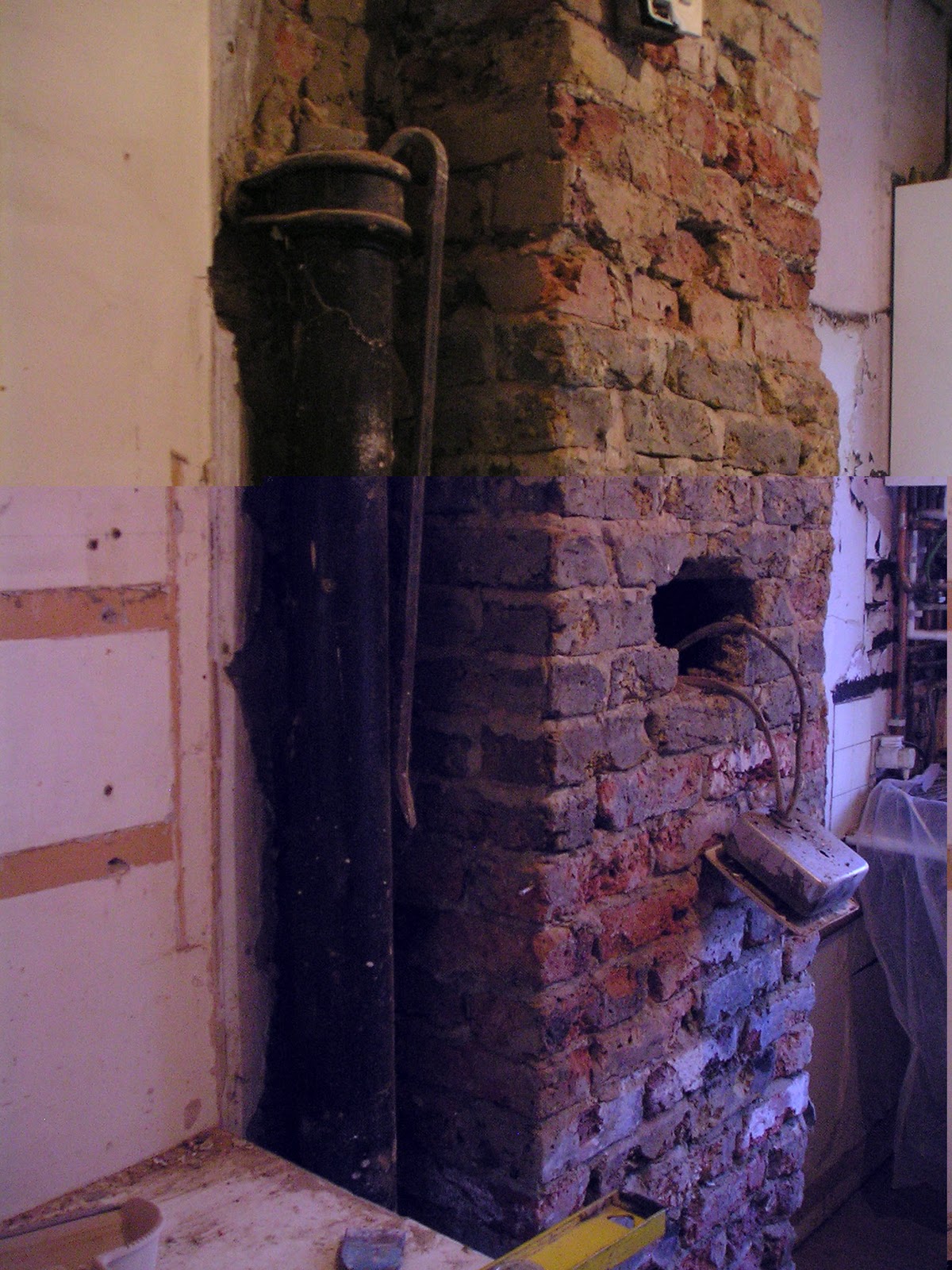
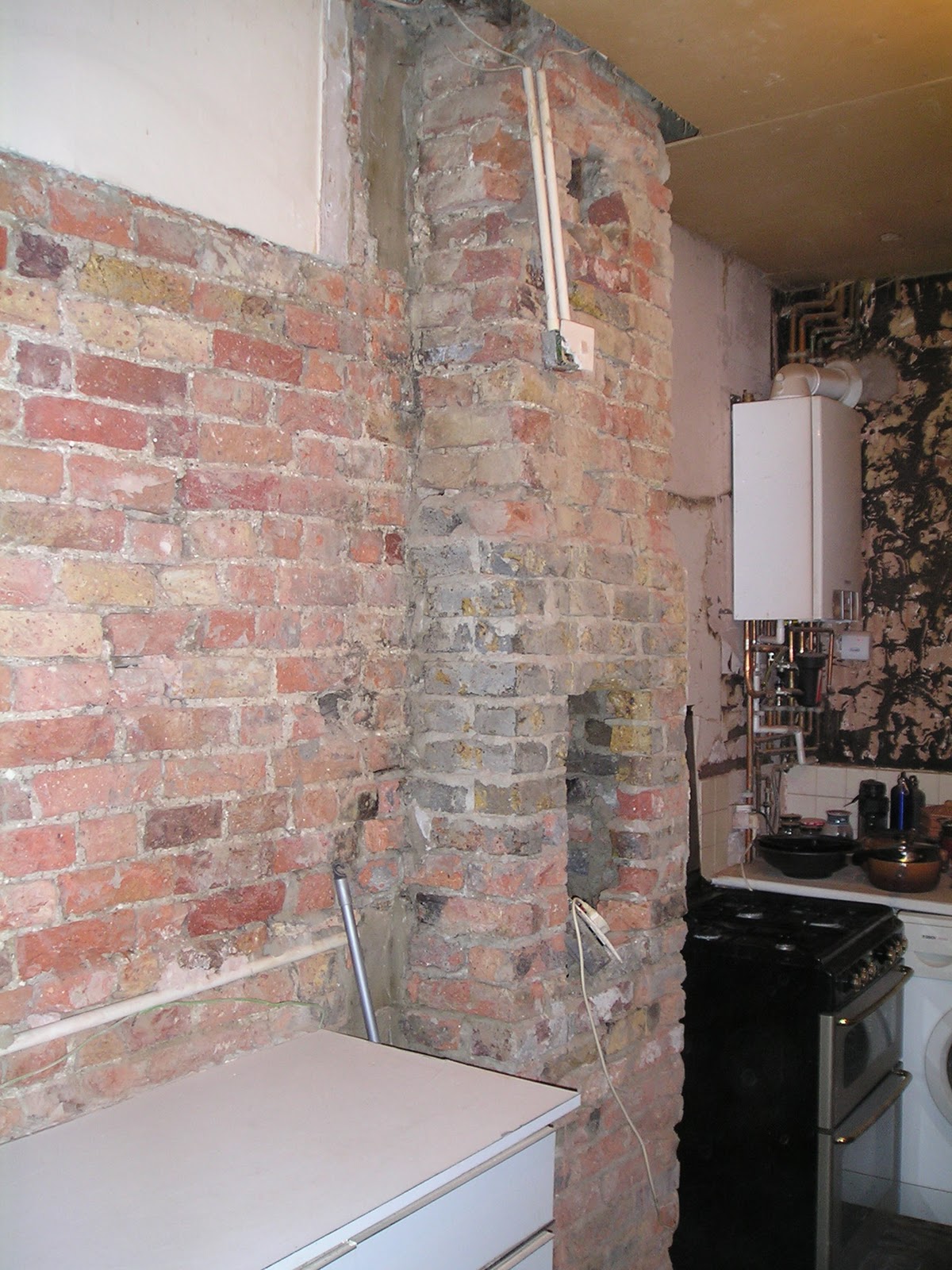
One of the aims yesterday (Day 1) was to reveal the chimney breast.  It may be possible to make a feature of the bare brick work.

The initial work reveals a bit of a mixed picture:  the brickwork is not as pretty as it can sometimes be.  By the time I get to see it, Gary and Wills have already come up with a plan B – suggestions about how to display some of the brick work whilst repairing and covering some that really isn’t attractive.

By the end of the day, the unused pipe has been removed and some of the brick work has been stripped back on the adjacent wall with the aim of sealing it and varnishing it so that it can stay bare.  By the time they leave the house, Gary and Wills have popped the cooker back in place, cleaned the surface and uncovered the sink and surrounding area so that I have the use of the kitchen after they’ve gone.

Whilst they have been working, I have been reflecting on the years I have spent in the house.  During this time I have taken decisions to set up my own business, to study neurolinguistic programming (NLP) and nonviolent communication (NVC), to train as a coach… all decisions that I didn’t foresee when I moved in in January, 2000.  I didn’t anticipate the decisions, I didn’t anticipate the deep learning that would come with the decisions.  I have experienced the almost paradoxical combination of living at the edge of my comfort zone and beyond and becoming increasingly connected and comfortable with myself.

I couldn’t have done this without support.  Some of it has been professional – working with a number of wonderful coaches over the last ten years, taking courses, as well as the support of Hoss, my wonderful accountant at Brooks Carling.  So much of it has come from friends and colleagues, including some I have met along the way.

My family, too, have been an enduring presence.  If ever there’s an advanced school of learning, it is in the family.  Sometimes my experiences of family have stimulated me to explore new ways of doing things.  Sometimes I have applied new learnings in the context of my family – whether they like it or not.  Often, they have been on tenterhooks – how would I fare as the owner and director of my own business…?

As I write, I take a moment to sit with the sense of gratitude I feel for so much support in my life.  I am reaching for words to describe what it means to me and find them inadequate in this moment.

Kitchen adventures

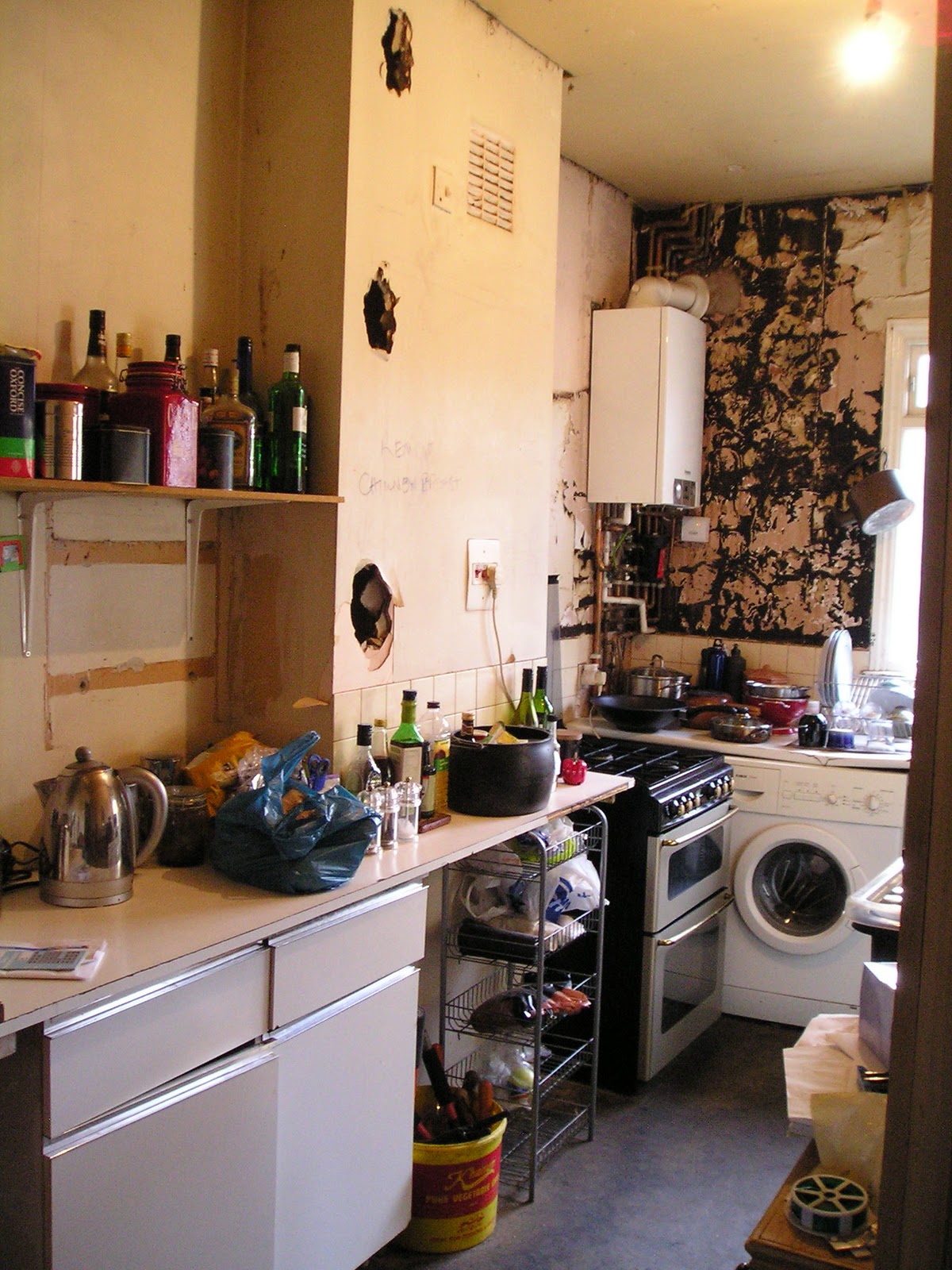
It’s functional, but it’s not pretty.

I’ve been without an internet connection for five whole days.  Nightmare!  I was almost thirty years old before I made any significant use of a computer.  Now, I use it every working day.  I have been doing my best to keep up in recent days using the tiny screen and keyboard of my Blackberry.

I’ve been itching to post.  I am about to embark on a long overdue adventure:  replacing my old kitchen.  I can’t begin to tell you how excited I feel!  When I say old, I really mean old…  When I moved into my home in January, 2000, the kitchen was already in need of an update.  My friend Alan drew the the picture below when he visited.

Even in 2000, my friends knew it had to go…

The trouble is, the rest of the house was also in need of an update.  Oh!  And in 2002 I took a decision I had not foreseen earlier – to leave full time employment and set up my own business.  Setting up Learning for Life (Consulting) took time, energy – including emotional energy – and all sorts of resources.  And in the meantime, believe it or not, I got used to the kitchen.

In recent weeks, planning for this transformation, I have been acutely aware of how grateful I feel to so many people in my life.  So many people have supported me on the great adventure of the last ten years.  I thought I’d share this kitchen adventure with you along with my thanks.  I’ll be sharing photos, ups and downs, and thank yous over the coming days.

Please share your comments.  I value your support.

Reflections from the dentist’s chair

Yesterday I went to the dentist to have a filling.  In the midst of a busy morning – getting things done before going up to Blackheath – I didn’t give it a second thought.  When I sat down in the dentist’s chair, however, I could feel my body tensing and I experienced waves of emotion.

My dentist, Lydia Pink at Sparkly Smile Dental Practice in Blackheath, is utterly fantastic and I knew – my rational brain knew – I had nothing to fear.  We’ve done work together with nary a problem.  No, this was the emotions of a much younger me, stimulated by being in the same situation many years earlier.

This was not “the same situation”, of course.  As a child having my first fillings, I don’t remember ever having an anaesthetic.  Dental techniques were not as developed then as they are today.  More importantly still, empathy was not then in fashion:  I don’t remember anyone showing any understanding of my fears.  Back then, I didn’t have what I needed to handle the situation alone.  No wonder it still casts a shadow in my adult life.

I wonder what responses are stimulated in you by reading this posting.  Perhaps you, too, have fears about letting someone loose with your teeth.  Perhaps you are ready to shut out these or other emotions – in yourself, in others.  It’s easy to deny them (by projecting them onto others, for example).  It’s easy to judge them.  And still, the bottom line is this:  both you and those you live and work with experience emotions in the here and now that reflect your childhood experiences.

The role that emotional intelligence plays in our effectiveness at work and at home is now well studied and documented.  As a leader, you are likely to be far more effective if you are able to embrace emotions – your own, others’ – and have ways to respond.  Your ability to respond effectively makes a difference in the moment.  It also makes a difference over time.

And Lydia?  She was quick to acknowledge my emotions and to accept them.  She took time over her work, telling me ahead of time what would happen and checking in with me to see how I was doing.  What I did notice and welcome were tears, which I take to be the grieving of a much younger me for the needs that were not met in my childhood dentistry experiences.  I wonder if I am letting go of the fears I felt then and everything that came with them.

Locked in conflict?

If you’re locked in conflict and don’t know which way to go, take a moment to watch this short clip on YouTube.  I offer it because it may help you to reconnect with your sense of humour (it’s funny!) and also because it offers a key insight into conflict and why it persists.

A number of thinkers in the fields of negotiation, mediation, communication and conflict highlight the need to let go of positions and focus on interests.  Maintaining a position involves taking the view that only one course of action – often requiring a particular response from another – will work and seeking to persuade that other to follow your path.

When you can understand what needs will be met by your preferred course of action you can find alternative ways of meeting those needs.  Equally, if you’re willing on both sides to understand each other’s needs, you can explore ways in which both people’s needs can be met.  Strangely, when you identify actions you can take to reach your desired outcomes and which do not depend on a particular response from another, the conflict tends to go away.  In case you need it, remember the mantra “you can’t change the others, you can only change yourself”.

Marriages can be saved, business deals can be struck, countries can avoid war by letting go of positions and connecting with underlying interests.