All posts by Dorothy Nesbit

The dance of acceptance

What does it mean to “see” another and to “be seen”?  How do we know when we are being seen?  And how does this link to meeting our need for acceptance?  These questions came up in conversation today and I found myself pondering them on the train on my way to a meeting.

Marshall Rosenberg, author of perhaps my most treasured book, Nonviolent Communication:  A Language for Life, identifies the need for acceptance as a need we all share – a universal need.  Just for now I am going to define the need for acceptance as the need to be seen in the round and to be accepted as we are.  You will notice that by this definition the need for acceptance and the question of being “seen” are tied up one with another.

So, our need is met when we know that we are seen (if you like, that others notice things about us that are true and respond to these, rather than focusing their attention on some idea of what or how we “ought” to be or imagining things to be true which are not) and we know that we are accepted for who we are. 

Even as I begin to write I recognise that, in practice, this is an area full of paradoxes and conundrums.  One of these, amongst many, lies in the question of what is “true” about us.  Families are full of truths which can jar with individual family members even though they may recognise the objective truth of each statement (“he’s the bright one” or “she’s the outgoing one”) because they reduce the individual to a single trait and one, what’s more, which is assigned to them by comparison with other family members.  So, even whilst we recognise the description that is assigned to us we do not have a felt sense of being seen.  Somehow something deeper is required.

And then there’s another conundrum.  Psychologists have a whole list of terms to describe the processes by which we accept parts of ourselves and reject others – this process, too, has its roots in our upbringing.  Constant comparison with a more extrovert sibling, for example, may lead an individual to think he is shy when no-one outside the family would see him as such.  Or we may reject some of our greatest strengths or talents and develop a “golden shadow”, so that when someone comments on our extraordinary skill in this area we do not feel we have been seen because we are not seeing ourselves in the round.  And because of this, our need for acceptance is not met.

And then there’s the question of the evolving self.  For whilst some qualities may be woven through us like a thread of gold others may be our adaptive (or maladaptive) response to the particular circumstances of our life at a particular point in time.  If we cast these responses into the concrete belief that they represent us as we truly are we may alienate ourselves from possibilities for growth and for getting to know ourselves.

And perhaps this brings us to an underlying thread when it comes to our need to be seen and accepted.  The truth is, our need for acceptance can be and is met to the extent that we are on the road towards knowing and accepting ourselves.  This suggests the need to be in rapport with ourselves – to be willing and able to notice what is true of us both in the round and at a particular moment in time.  It also suggests being in rapport with another who is able to see us and share with us what they see in ways which we can hear and understand.  And for that other to be a true witness, it implies someone who in turn is able to be present to him- or herself  before he or she can be a witness to another.

This is the dance of acceptance:  of seeing and of being seen.

PS  Just to let you know, as a member of Amazon Associates UK, I shall receive a referral fee for any books you buy using the links in this posting.
LinkedIn: still keeping in touch

Time moves on.  In August of last year I reported 49 connections on LinkedIn and still growing.  As I write today the number has gone up to 180.

This is an interesting number.  On the one hand, there is a good number of people I know with whom I am not (yet) LinkedIn.  On the other hand, I am starting to have invitations to LinkIn from people who have enjoyed my postings on the groups to which I belong and I don’t yet know quite how to respond.

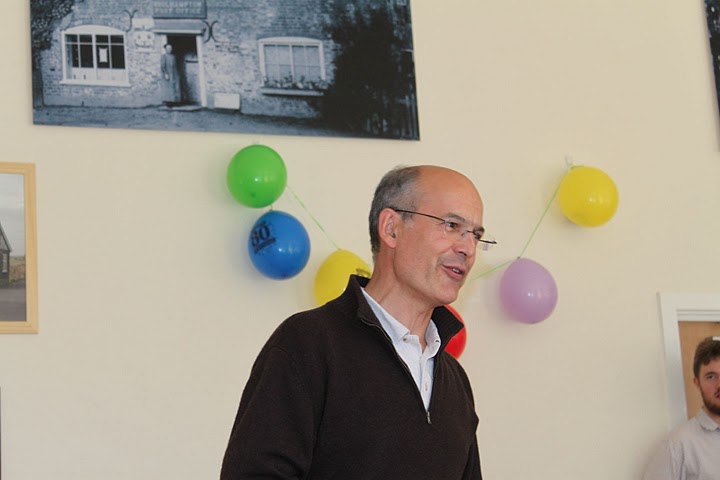
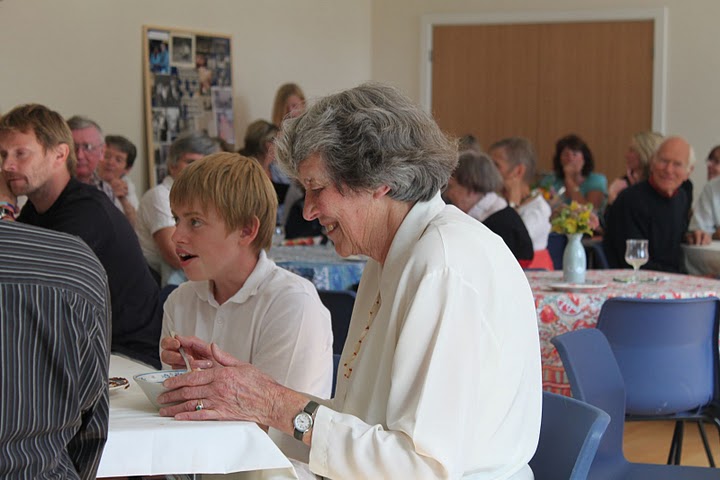
One thing I have enjoyed is connecting via LinkedIn with people I have known personally.  Meeting in this way enriches my understanding of them, helping me to see them in the round – something I cherish.  Xavier Dujoncquoy is one of these.  Xavier used to stay with my family as a young man and joined us on Saturday to celebrate my mother’s 80th birthday.  Here’s Xavier speaking about his memories of those days – and my mother listening.

It was a wonderful day.

Championing your inner parts

Have you noticed how, when you are in conflict with yourself, there’s a part of you you champion and a part of you you like to tell to p*ss off?  Which part you champion depends on the values you espouse and still, you are unusual if you champion yourself in the full glory of all your parts.  So, a part of you basks in the light of your approval whilst another part of you prowls around in the shadows.  And guess what, it is rarely the part you champion that “wins”.

The result can be a kind of inner stasis, even whilst you are seeking to move forward.  You want to write that proposal or to phone that client or to stop eating chocolate or… or… or…  And yet, somehow, when it comes to the crunch, you are guided by the part of you you most condemn.

Some thinkers view these “shadow” parts as gremlins to be conquered – overcome by force in order to make way for those parts we most favour.  I prefer to view them differently.  For each part has a positive intention even if the means by which that intention is made manifest is unhelpful at this stage of our lives.  When we respond to the different parts of ourselves we can afford to champion them all, to take time to ask “what is it that you really want for me?” and to thank each part for acting as the guardian of this positive intention.  Only from this position of embracing our different parts can we begin the journey towards finding new ways to fulfill old intentions.

In case you want to take a new approach and to connect with your parts in conflict, here are some steps you can take to get started:

  • Start by saying hello to each part in turn.  You may be surprised and still, they will answer back;
  • Let them know that you’d like to spend some time with each part in turn and ask them, will they let you do this without interrupting each other?  If you get a “no” you might like to ask what’s needed before each part feels comfortable to give the other space;
  • Take time with each part in turn – how about five minutes with one and then a break before five minutes with another?  Let each part know that you trust that it has positive intentions and be honest with either part if you have not understood what its intentions are.  If you don’t know, ask!
  • You might like to take time every day for this over several days.  Notice how open you are to hearing what each part wants for you;
  • Say “thank you” to each part for his or her good intentions for you.  When you can say thank you with full sincerity you are ready to be the champion of your inner parts, just as they have been seeking to champion you.  And guess what!  Since each part is just that – a part of you – you are, in this way, championing yourself.

As a footnote, I would add that whilst you may value the intentions each part has for you, you may find its way of fulfilling its intentions highly frustrating.  At the same time, if you want to agree new ways to fulfill those intentions, you will need to do this from a place of mutual respect and appreciation – that’s between you and your different parts.

From the stable of NLP: “parts integration”

Jamais deux sans trois, as the French would say.  It seems to me that all my clients are bringing inner conflict to our coaching right now.  This is hardly surprising since we all, at times, experience the inner voices that seem to be in conflict with each other.  The clues are in our language (“on the one hand… and on the other hand…”), in the way we feel (typically, torn) and in our vision of two diametrically opposed options.

The manifestation of these parts is diverse.  For one person it is the part that wants to earn masses of money versus the part for whom money is just not important.  For another person it is the part that wants to stay in a job even though it’s desperately dull versus the part that wants to say “to hell with it” and leave in search of something more exciting.  For a third person it is the part that wants to share just how much she loves her new partner versus the part that wants to take things one step at a time.  Even as I write I wonder if, at root, our conflict is between the part of us that wants to keep us safe and the part of us that seeks adventure – maybe even to pursue our true calling.

Beneath this inner conflict lie assumptions that are untested or which may be understood at some cognitive level and which have not yet been understood or integrated into our bodies or way of being.  The mother of all assumptions is, of course, that the causes that our inner voices are championing are mutually exclusive.  It’s not unusual for people to recognise and celebrate one part of themselves whilst seeking to repress the other part – and guess what, the part we are least inclined to sponsor always finds a way to express itself, to hold sway.

It’s not often, as a coach, that I offer to step away from pure coaching to provide an intervention from the set pieces of neurolinguistic programming (or NLP).  At the same time, I recognise the elegance of NLP’s “parts integration”, which facilitates a dialogue between inner parts in conflict, helping each part to hear the aims of the other and helping both parts to come together to collaborate in meeting aims which were seen as mutually exclusive and are now understood to be perfectly compatible.

In truth, this integration of our inner parts is an ongoing journey rather than a one-off event.  It is part of a journey towards self-acceptance and it is significant as a contribution to our inner peace as well as to creating lives that are productive and fulfilling.

If you want to learn more, keep an eye on this blog – I sense this is a topic to which I shall return.  If you want to experience the NLP “parts integration”, seek out an NLP Practitioner to support you.

Celebrating my mother on her 80th birthday

My mother has resolutely resisted the computer age and won’t be reading my blog today or any other day.  And that’s OK.  Still, this won’t stop me celebrating her today, on her 80th birthday.

There are many words I could say and many things I could celebrate and still, words will not be enough.  How can you begin to do justice to eighty years of life and living in a single blog posting?

Maybe I should add, how can you begin to do justice to eighty years of supporting life and supporting others in their living, including the lives to which she herself gave birth?  For as well as giving birth to her own four children, Mum has supported the lives of many, from the children to whom she was House Mother at Beenham Lodge Children’s Home, to her own children, her sister (I especially remember Mum’s support to her sister after the birth of her first children, my twin cousins), her parents in their mature years, her husband (my father)… right through to the men and women she still cooks for at the Vintage Club in Woolhampton.  And that’s without taking in the many animals she cared for during her years of farming and the plants she tends in her garden and allotment.

And then there’s the question of how many wedding dresses she has made over the years, and wedding cakes, and birthday cakes and – well, the list would be long.  Only this week, she made a birthday cake (Mr Sneeze) for the fifth birthday of her grandson Joel.  Oh!  And how many concerts she organised for St. Peter’s Church, Woolhampton, before gracefully retiring just two years ago.

With so much more that could be said and knowing that no words could do her justice, I give you my mother, Stella Nesbit, on her 80th birthday.  Here she is at my cousin’s wedding just a couple of years ago:

Making peace on peace day

Our news is often filled with evidence of conflict on a grand scale. It can give the impression that conflict is a large-scale affair taking place some way away and in which, by implication, many of us have no part.

Yet the most cursory survey can remind us of the conflict that is in our lives. Perhaps you have some inner conflict that is leaving you feeling torn right now – for whatever reason. Perhaps you are aware of some conflict in your workplace, barely expressed but simmering and visible. Perhaps, as you survey your immediate and extended family, you notice myriad major and minor disagreements which, over time, have been written into the ongoing “story” of your family.

Today, 21st September, is Peace Day, an annual day whose significance is growing around the world. You can find out about Peace Day by watching two short videos at the Pathfinder website or by going to http://www.peaceoneday.org/.

In talking about peace, I’d like to mention the work of Marshall Rosenberg (as I have done many times) author of Nonviolent Communication: A Language for Life. Marshall has dedicated many years to evolving and sharing a way of communication which promotes peace.

Ban Ki-Moon, Secretary General of the United Nations, asks in the short films I mention above: “What will you do to make peace on 21st September?” I offer the following suggestions for any reader who is seeking inspiration and I also invite you to share via the comments box below: What did you do today to make peace and with what outcomes?

Here are my suggestions:

  • Try peace on for size: take five minutes to contemplate a world in which peace is the norm. As you imagine this world, notice what it evokes in you – what feelings, thoughts and so on. And if you find yourself thinking “yes, but” let go of the gap between now and peacetime and step back into living in a world in which peace is the norm;
  • Take ten minutes to find out about Peace Day by watching the videos above or going to http://www.peaceoneday.org/;
  • If you haven’t read Marshall Rosenberg’s book, Nonviolent Communication: A Language for Life, buy your copy today – and be sure to read it before this time next year!
  • Ask yourself, is there anyone with whom I’d like to make peace right now? And if there is, consider what steps you can take to make peace with that person or people;
  • Talk about peace today. Follow your instincts to decide who you would like to talk with and ask them if they know that today is international Peace Day.

Coming alive

“Don’t ask yourself what the world needs; ask yourself what makes you come alive.
And then go and do that. Because what the world needs is people who have come alive.”

Howard Thurman

I am savouring this quote this morning, which speaks to so much that I hold to be true.

Perhaps one of the most important decisions we make in our lives is this:  do we act in the belief that we need to shape ourselves to what the world wants if we are to meet our needs, including our most fundamental needs for safety and survival, or do we act in the belief that we are part of something larger than ourselves, that we are called to contribute to this larger whole and will be supported and sustained as we explore and manifest our greater contribution?

As I write I reflect on the many men and women I have interviewed over the years to assess their suitability for senior leadership roles.  There are some who act in the awareness of this larger whole and of the contribution they are called to make.  Their energy is infectious – engaging and inspiring.  These are the men and women I feel drawn to spend time with.

As a coach to senior leaders, I notice how much I feel drawn to work in partnership with those men and women who, in some way, are manifesting the energy which might be called the living energy of their true self.  It could be that they are already in touch with this energy or it might be that this energy is shining through them despite their best efforts to overlook it.  Still, it is there.  How wonderful to work in partnership with clients as they learn to connect with their inner wisdom and guidance – to trust themselves – and in this way to uncover their true path.

And what about you?  It’s possible that these words have no resonance for you – perhaps you have already ceased to read.  Maybe you have questions, such as “how can I know that one or another belief is true?”  The answer is – you can’t.  Each belief is just a belief.  And given that it is just a belief, you might as well choose the belief that serves you best, right now, in this moment.

And in case you’re wondering which belief to choose I offer you this question to guide you:  which belief is most likely to help you to come alive?

Being a great leader starts with being yourself

Recently, I amended the brief description that sits under the heading “about me” at the top of my blog to read:

Being a great leader starts with being yourself. I am a holistic coach to senior leaders. I help men and women in senior leadership positions find and walk their true paths in line with natural laws – what works.

This statement reflects my growing understanding of my niche – those clients with whom I most enjoy working, those clients with whom I do my best work.

Perhaps there’s a paradox that sits underneath this statement.  On the one hand, I have been involved over the years in a great deal of research into what makes for the most outstanding leaders.  This research, which had been reflected by Goleman in his books The New Leaders and Working with Emotional Intelligence suggests that there is a common recipe for all leaders and, within organisations, a variation on this recipe which is distinct for a particular organisation.  A common criticism made of this work is that this suggests the “cookie cutter” leader – and we can all see that leaders vary enormously in their personal style and effectiveness.
 
On the other hand, it’s my view that the path to personal effectiveness – mastery – as a leader is a highly personal path which varies enormously from person to person.  It involves understanding and accepting oneself as well as making adjustments to improve effectiveness.  The changes we make don’t stick unless they are congruent and aligned to who we are and to what we want.  This is why I enjoy my work so much – because I take great pleasure in supporting the path of the individual towards his or her personal recipe for success.
 
There is another paradox here.  Oftentimes, when organisations are involved in discussing the competencies they most yearn to see in their leaders there is one that comes up again and again, labelled as “integrity” or “honesty”.  At the same time, many people walk through their careers in the belief that they need to “play the part” in order to succeed.  At best, this reflects insight into what does and doesn’t work in a particular organisation and an informed choice to work in ways that are effective.  At worst it is the stuff of deep personal stress as we worry that we will not be fully accepted in the workplace unless we play our part well. 
 
And the bottom line is this:  no matter how hard we try, we don’t get to hide.  Our true self creeps out around the edges.  If we have a level of self mastery this can be a great gift to self and others because we all have skills, competencies and other attributes that are of great value in the world of work if only we can find and claim our rightful place.  On the other hand, as long as we are trying to be someone we are not we may struggle to succeed, for the effort of maintaining the facade is great and ultimately ineffective.  It’s just as well that the journey to authenticity and self mastery, whilst challenging and at times painful on the one hand, is also liberating for ourselves and for those we lead on the other – a “win, win” all round.
 
I wonder, to what extent would you describe yourself as bringing your best self to work?  As authentic?  As knowing what works?  A “mark out of ten” will give you a crude measure of your own authenticity in the workplace. 
 
PS Just to let you know, as a member of Amazon Associates UK, I shall receive a referral fee for any books you buy using the links in this posting.  
Defining my niche

Have I shared with you that I have been working this year with Kathy Mallary, a coach who specialises in helping coaches to market their services?  Kathy has been putting me through my paces in recent months as I seek to define my niche.

Another way of putting this – and perhaps a bit more appealing for those of us who enjoy saying it as it is – is that Kathy has been helping me to understand what’s true about those people I most enjoy working with so that I can speak to them (you) in particular through my blog, newsletter and other marketing.  In time, I’d like to think that everything I write (my “marketing”) is a gift to those people I most enjoy working with and whether or not they choose to work with me.  This way I get the “triple whammy” of (a) knowing that when people are looking for the kind of services I most enjoy providing they’ll know to contact me, (b) knowing that my readers will point people in my direction who might be interested in what I have to say and (c) knowing that there are plenty of people who will never become my clients who still enjoy and benefit from reading me.

Now, along the way, I’ve discovered something about myself and my approach to marketing that has been passing under the radar – almost.  I’ve discovered that there’s been a gap between the language I speak when I’m talking about coaching with commissioning managers in organisations and the language I speak with my clients in the privacy of our one-to-one coaching relationships.  It as if, for me, the best kept secret about corporate or executive coaching is that whilst the organisation benefits – and that’s why coaching is worth investing in on behalf of the organisation – the person seeking coaching (or “coachee” or “coaching client”) benefits tenfold.

Kathy has encouraged me to “come out” and cry this from the roof tops.  So I have been putting together a statement of my niche and getting ready to make this the focus of many, many postings in the future.  If you’d like a sneaky peek, why not come back tomorrow?

In the spirit of celebration

What do you do when you’ve topped your career by winning a lifetime achievement award?  Tony Maxwell, national winner in 2003 of the Teaching Award’s Award for Lifetime Achievement returned to roots he first laid down in the ’60s, when he sang and played guitar and harmonica in Manchester as a member of the band The Sink.  Following his retirement from 37 years at St Michael’s RC Secondary School, Stockton-on-Tees, including eight years as Head Teacher, Tony took up the opportunity to appear at the Hartlepool Jazz Club and responded to requests for a CD of his music by recording a disc with the Jeremy McMurray Quartet.  His decision to contribute any profits to the Help for Heroes charity reflects the spirit of public service which is so often seen amongst Teaching Awards winners.

Tony gives a brief plug to this project at the beginning of the Teaching Awards’ national judges meeting, before we begin the business of the day.  Today’s meeting is the culmination of the 2010 judging process.  Judges have read thousands of nominations and visited schools across the country to determine the regional winners for 2010 and awards ceremonies have been held in each of the country’s seven regions.  Judges at national level have selected their winners from the region’s winners and we are ready to share our decisions with our colleagues on the judging panel.  The winners will, of course, be announced at the national awards ceremony at the end of October.

The panel meeting is unlike meetings I have attended elsewhere in my life.  The focus is on the many aspects of regional winners’ contribution that were celebrated at regional level and it’s clear that the national judging teams have struggled at times to place the metaphorical cigarette paper between regional finalists to decide on the national winner.  I experience a rush of fellow feeling when one of my colleagues on the panel shares how he “blubs so much more easily” now that he is older and another colleague describes a moment on one visit when she was moved to tears.  As the meeting progresses the sense of celebration builds around the room and I find myself wondering, as I leave the meeeting, how would life be different if it were in our wider culture to look for the things that are working and celebrate them as we have been doing here today?

I am aware that the Teaching Awards is offering an opportunity for celebration and, in this way, opening up possibilities for a shift both in our culture in schools and in our wider culture.  As Tony Maxwell says about the music he has chosen to record on his CD:  “The world is there to be changed and there is no age barrier to being involved in that process”.

I look forward to seeing you at the Awards ceremony in October.